

How to Plan a Trip to Galicia
Galicia is easy to visit, but it rewards a bit more planning than other parts of Spain.
Distances are longer than they appear, public transport is limited outside major cities, and many of the most interesting places are spread across the coast and interior. A few early decisions — where to base yourself and how you’ll get around — make the rest of the trip much smoother.
Where to Base Yourself
Most trips to Galicia are built around one of three bases:
Santiago de Compostela
The most practical base for first-time visitors, especially without a car.
- Walkable historic center
- Main hub for day trips
- Strong transport connections
Most guided tours also depart from Santiago, which makes it the simplest place to stay if you’re not renting a car — see our guide to what to visit in Santiago de Compostela for the key sights.

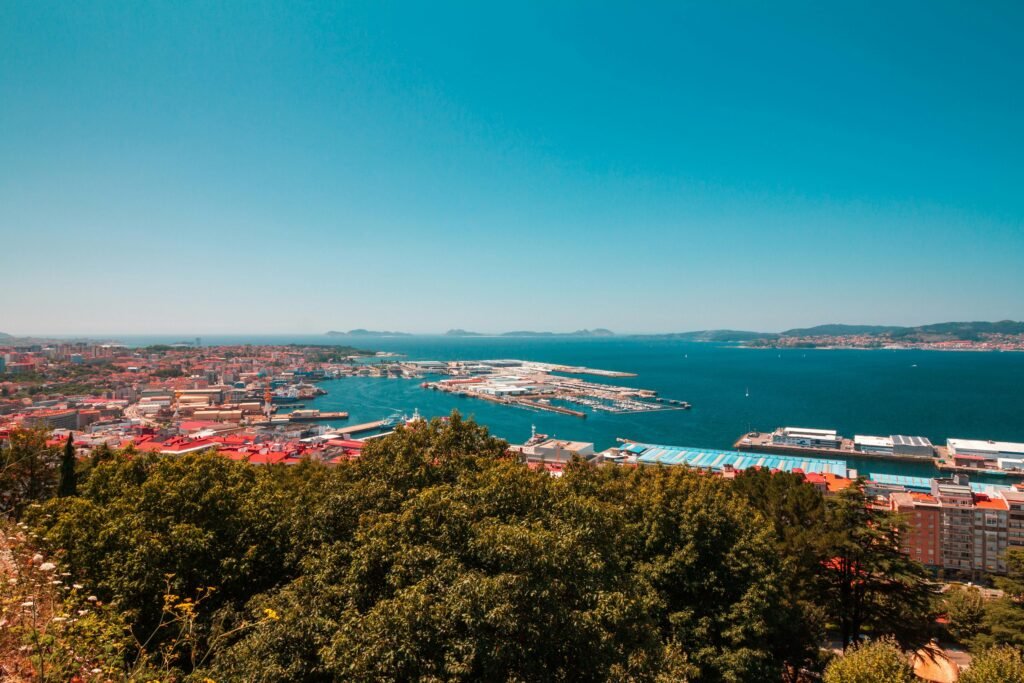
Vigo
Best base if your trip is focused on the coast and the Rías Baixas.
- Access point for the Cíes Islands
- Strong seafood culture
- Less tourist-focused than Santiago
- Largest city in Galicia
A more lived-in coastal city with a strong food scene and direct access to the Rías Baixas. Its position near Porto makes it a practical base if you’re combining Galicia with northern Portugal.
A Coruña
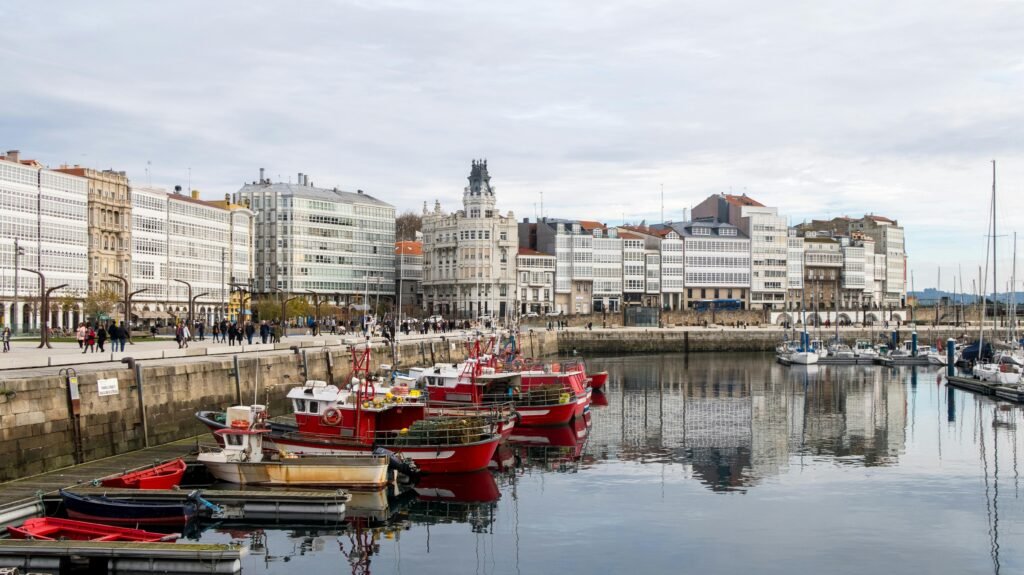
Best base for exploring the northern coast.
- Easy to navigate
- Good mix of city and seaside
- Access to beaches and coastal towns north of Santiago
- Urban beaches within walking distance
See our guide to what to visit in A Coruña for a focused overview.
Getting to Galicia
Most international travelers won’t fly directly into Galicia.
Via Madrid
The most common route.
- Fly into Madrid
- Continue by train or short flight
High-speed trains operated by Renfe connect Madrid to:
- Ourense
- Santiago de Compostela
- A Coruña
- Vigo
Travel time is typically 2.5–4 hours.
Via Porto
Often a strong alternative.
- Good international flight options (often cheaper)
- Direct buses connect Porto to Vigo
From Vigo, you can continue across Galicia by train or bus.
Flying Directly to Galicia
Galicia has several regional airports:
- Santiago de Compostela — best connected
- A Coruña — smaller but useful
- Vigo — similar profile
These mainly connect to Spanish cities and select European destinations.
Getting Around Galicia (Do You Need a Car?)
If you want to see Galicia’s best landscapes — Ribeira Sacra, the coast, smaller villages — having a car makes a significant difference.
You can still have a good trip without one, but it requires more planning and limits flexibility.
When a car is worth it
- You want to explore beyond major cities
- You’re visiting multiple regions
- You want full control over timing and stops
When you can skip it
You don’t necessarily need a car, but you’ll be relying more on public transport or guided tours.
- You’re comfortable using buses and trains, even if it takes more planning and less direct routes
- You’re open to guided tours for places that are harder to reach
- You’re not trying to explore more remote areas, smaller villages, or secluded beaches
Without a car, your trip will be more structured and less flexible — but still very doable.
For a breakdown of when tours actually make sense, see our guide to tours in Galicia: what’s worth it.
Trains
Spain’s rail network, operated by Renfe, connects the main cities efficiently.
- Fast routes between Santiago, A Coruña, Vigo, and Ourense
- High-speed connections to/from Madrid
For smaller towns, trains are slower and less frequent.
Buses
Buses are often more useful than trains for reaching smaller towns and coastal areas.
- Extensive regional coverage
- Essential for rural and coastal destinations
- Cheapest Option
Apps like Moovit help with routes and schedules.
Driving
Driving is straightforward and often the most efficient option.
- Roads are in good condition
- Traffic is generally light outside cities
Tolls can be expensive, especially on the AP-9 along the coast, and parking can be limited in city centers.
Rental cars are widely available and relatively affordable, especially if you can drive manual. Major companies like Avis, Budget, Europcar, and Sixt operate at airports, train stations, and city locations.
Taxis and Ride Apps
Taxis are reliable, regulated, and reasonably priced.
- Easy to find in cities and larger towns
- No need to negotiate fares
Apps like Cabify operate in some areas; Uber is limited. BlaBlaCar is a widely available option but harder to plan in advance.
How Many Days Do You Need?
3 Days (Tight)
- Santiago de Compostela
- One day trip (Finisterre or Ribeira Sacra)
5 Days (Balanced)
- Santiago
- Ribeira Sacra
- Coast (Finisterre or Rías Baixas)
7+ Days (Ideal)
- Santiago
- Ribeira Sacra
- Rías Baixas
- Costa da Morte
- Optional: Cíes Islands
What to Prioritize
Galicia is best understood by region rather than individual cities.
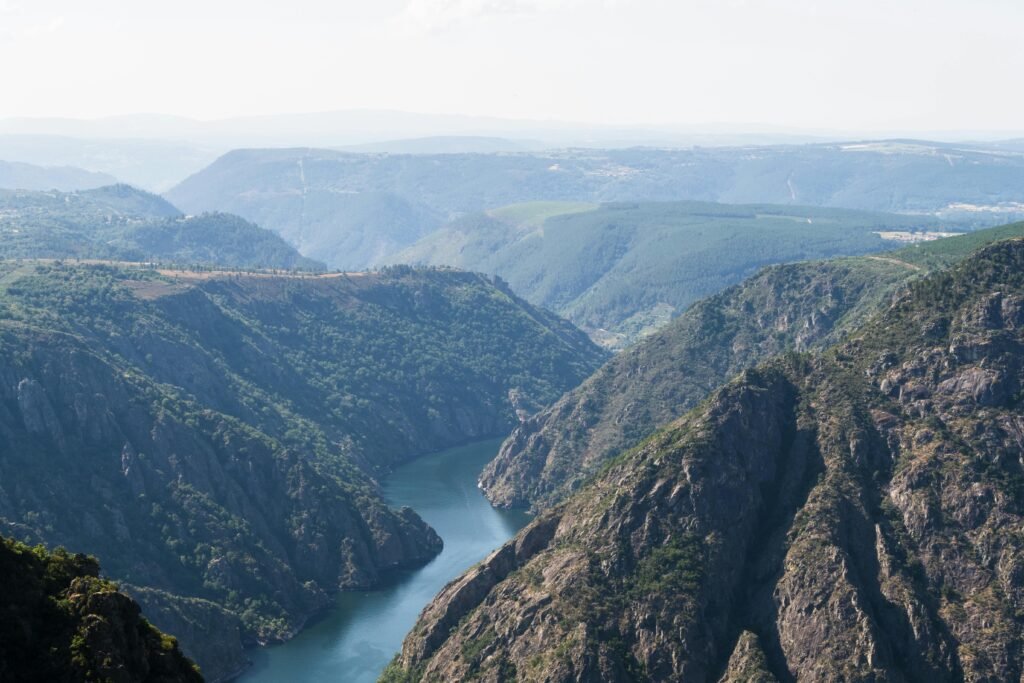
Ribeira Sacra
River canyons, vineyards, and monasteries.
- Wineries and optional boat routes
- Viewpoints over the Sil River
- Scenic drives between small villages
See our guide to Ribeira Sacra for how to structure your visit.
Rías Baixas (Southwest Coast)
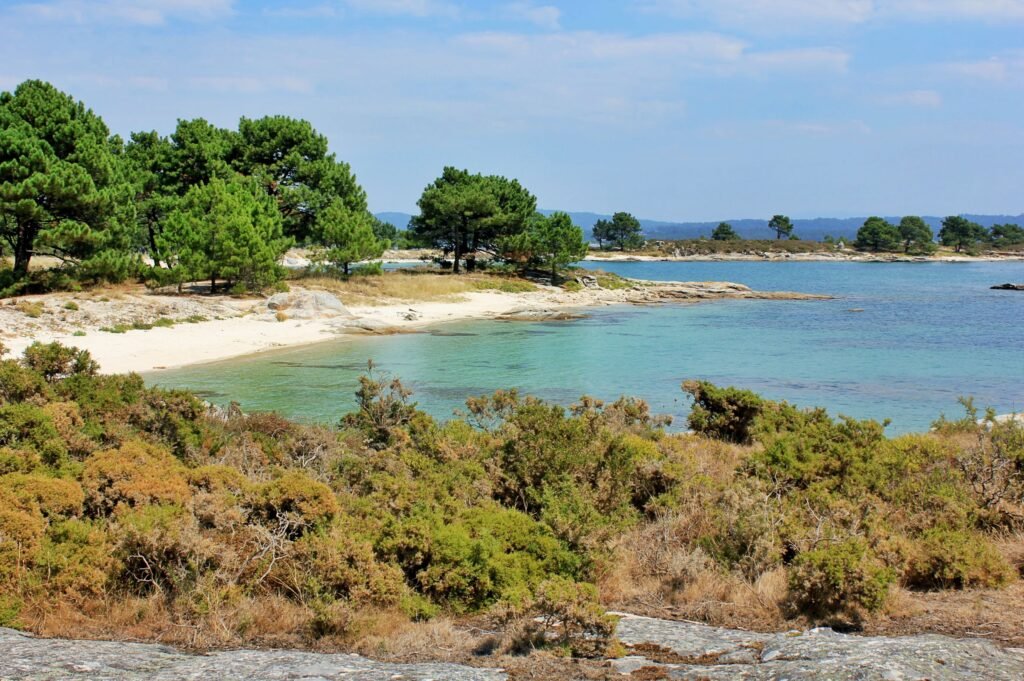
Galicia’s most accessible coastal region.
- Beaches, inlets, and calmer waters
- Islands like Illa de Arousa and Illa da Toxa
- Wine towns like Cambados
- Coastal villages such as Combarro
This is the easiest way to experience Galicia’s coastal culture without long drives.
Northern Coast & Costa da Morte
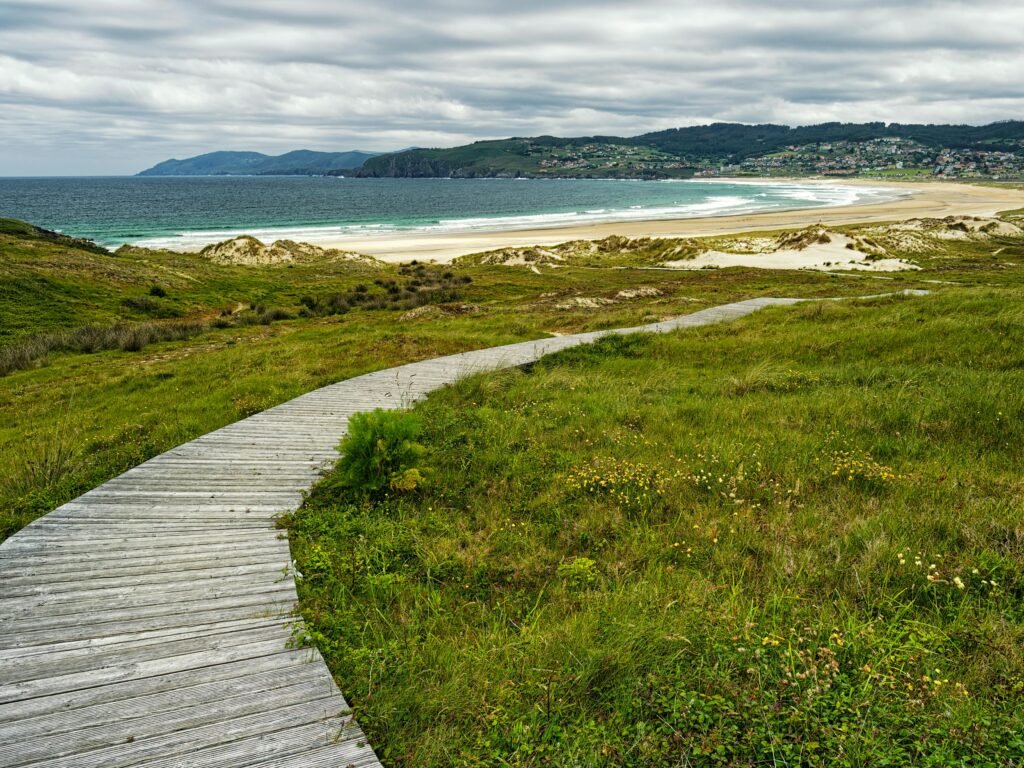
More rugged, exposed, and spread out.
- Cliffs, open Atlantic views, and dramatic landscapes
- Coastal stretches around Ferrol and beyond
- Key stops like Cape Finisterre and Muxía
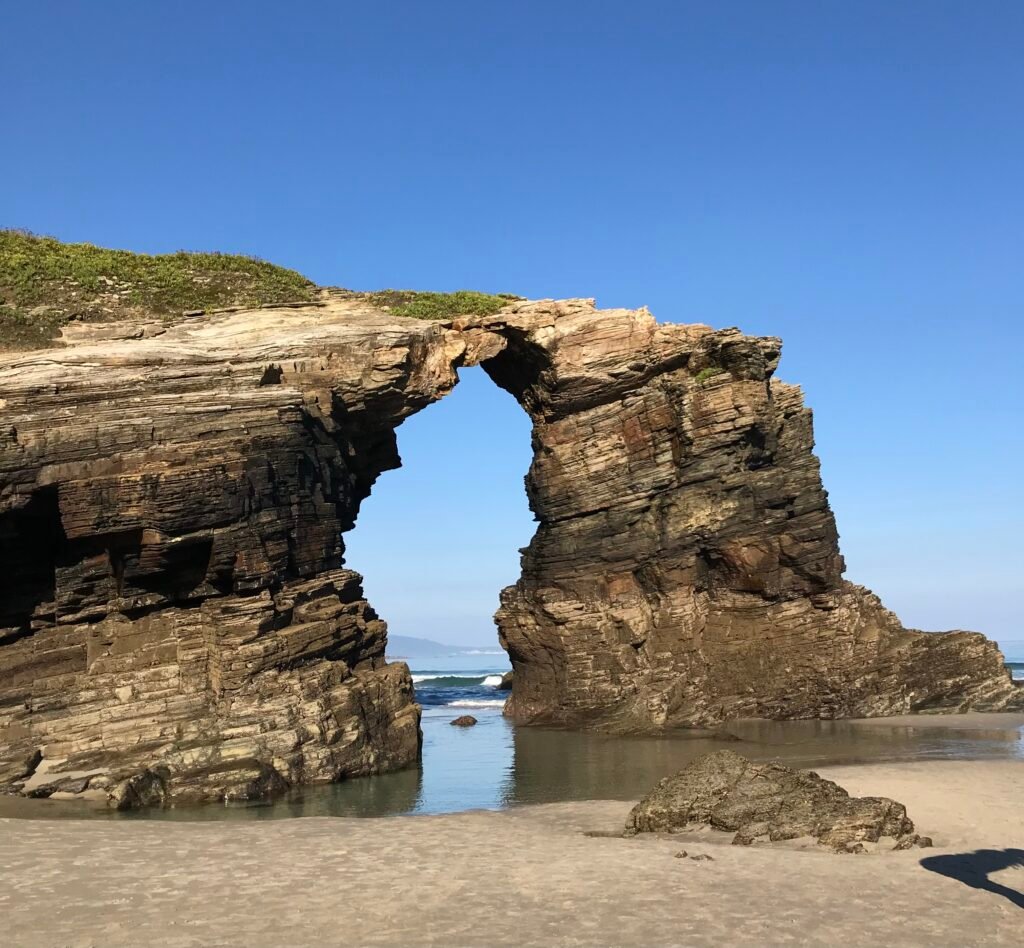
- Praia das Catedrais: one of Galicia’s most distinctive natural sites.
This region includes some of Galicia’s most striking beaches and scenery, but distances are longer and planning matters more — see our guide to the best beaches in Galicia for specific stops.
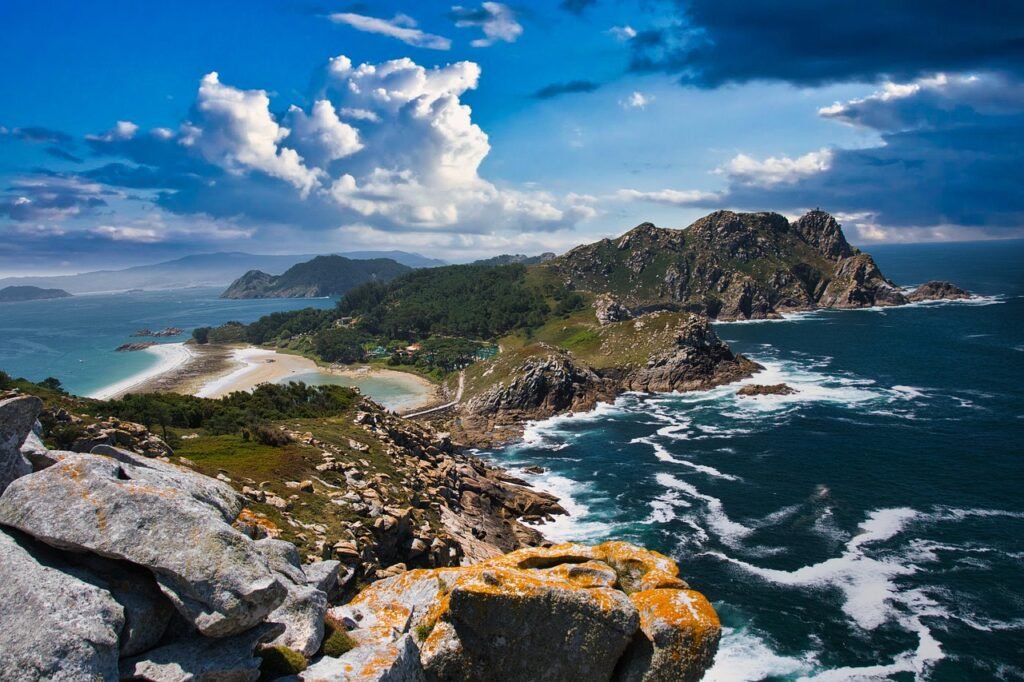
Cíes Islands
A protected island group off the coast of Vigo.
- Clear water and limited development
- Ferry access with permit required
- Well-marked walking routesSee our guide to visiting the Cíes Islands for details.
See our guide to visiting the Cíes Islands for details.
Villages and Small Towns
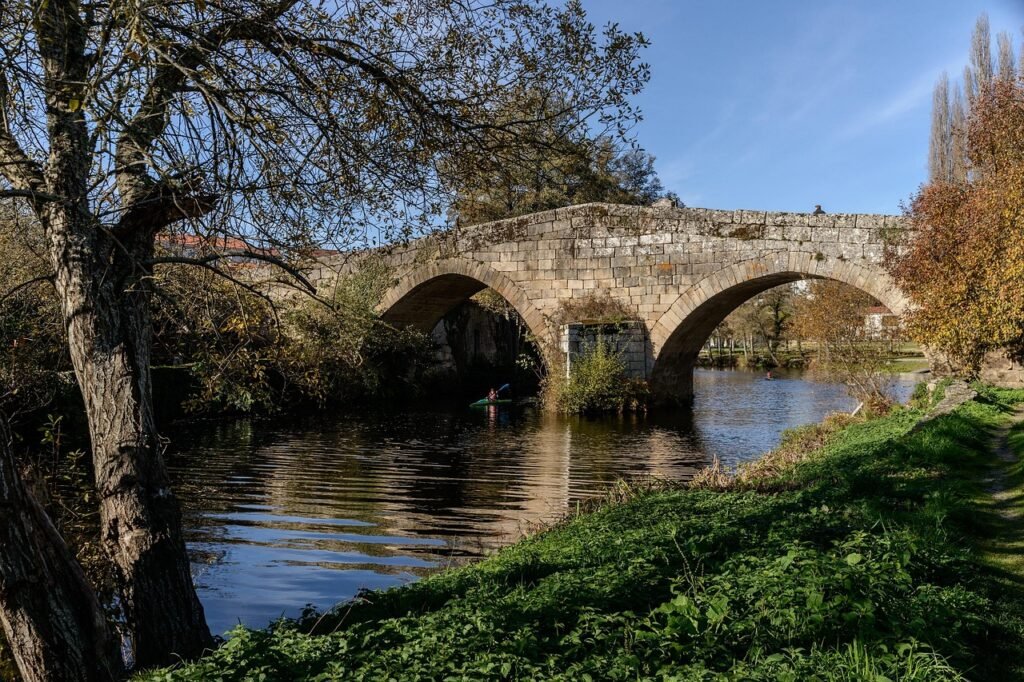
Some of Galicia’s best places aren’t major destinations.
- Smaller towns often feel more authentic than cities
- Best experienced as part of a route rather than standalone stops
See our guide to the most beautiful villages in Galicia for places worth adding to your trip.
When Tours Make Sense
Most of Galicia is better explored independently.
But tours can be useful when:
- You don’t have a car
- You’re short on time
- The destination is spread out or logistically complex
- You want deeper historical or cultural context
For a full breakdown, see our guide to tours in Galicia: what’s worth it.
Practical Things to Know
Opening Hours
- Many businesses close on Sundays
- Shops often close for a few hours in the afternoon
- Dinner is late (typically 8:30–10:30 pm)
Weather and Seasonality
Galicia’s climate is variable.
- August is the busiest month due to domestic tourism
- Outside July–August, expect some rain
- Coastal cities like A Coruña can be windy
Payments and Tipping
- Credit cards are widely accepted
- Carry some cash for smaller places
- Tipping is not expected
Respecting the Region
Galicia remains less visited than other parts of Spain, but tourism is growing.
Many places are not built around tourism, and a bit of awareness and respect goes a long way.
Bottom Line
Galicia is not a place you rush.
If you choose the right base, understand how to get around, and focus on a few key regions, the rest becomes straightforward. Most places can be explored independently, with tours useful in specific situations.
If you’re planning a longer trip or renting a car, it’s also worth understanding when travel insurance actually matters.

Best Beaches in Galicia

The Cíes Islands: Visiting Galicia’s Most Beautiful National Park

Ultimate Guide to Ribeira Sacra

What To See in Santiago de Compostela

What To Do in A Coruña

Prettiest Villages in Galicia
Recommended Tours in Galicia

Great post, you have pointed out some excellent details , I as well think this s a very excellent website.
Lovely just what I was looking for.
wonderful post, very informative. I wonder why the other experts of this sector don’t notice this. You should continue your writing. I am confident, you’ve a great readers’ base already!