
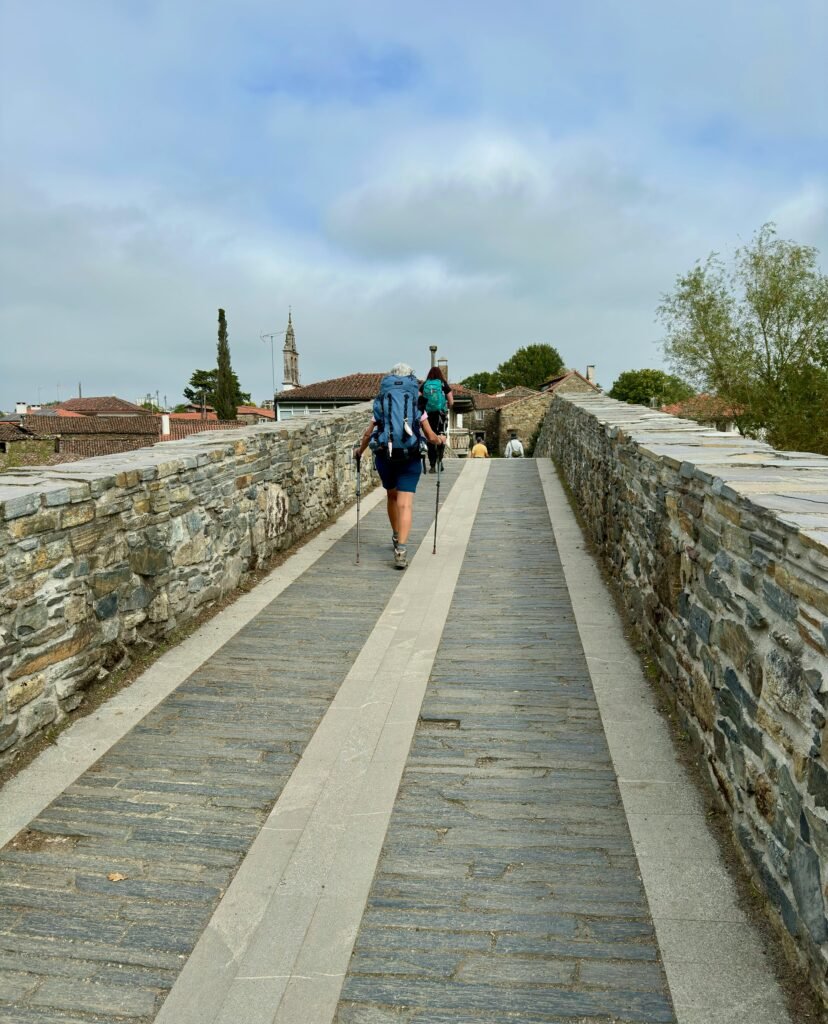
Which Camino Route Is Right for You?
Choosing to walk the Camino is easy — choosing which Camino to walk is the hard part. Each route offers a completely different experience, and picking the right one can shape your entire journey.
There isn’t just one Camino — there are many. Some are social and lively, others are quiet and reflective. Some follow gentle coastal paths, others climb steep mountain passes. Some can be done in a week, while others take over a month. Picking the right route doesn’t just affect how sore your legs will be — it shapes your entire experience.
There is no “best” Camino route in general. There is only the best Camino route for you.
Choose well, and the Camino becomes unforgettable. Choose poorly, and it can feel exhausting, lonely, overcrowded, or simply not what you hoped for. This guide is designed to help you match your fitness level, time frame, personality, and travel goals with the route that truly fits you.
Quick Answer: Which Camino Should You Choose?
If you just want a fast recommendation, start here:
| First-time pilgrims & social walkers → | Camino Francés |
| Flat terrain & relaxed pace → | Camino Portugués Central |
| Coastal scenery & seafood towns → | Camino Portugués Coastal |
| Short trip (5–7 days) → | Camino Inglés |
| Spiritual solitude & challenge → | Camino Primitivo |
| Wild coastline & dramatic views → | Camino del Norte |
| Long-distance, quiet, southern route → | Vía de la Plata |

What Type of Pilgrim Are You?
Before looking at maps and distances, it helps to be honest about how you like to travel. Many people choose a route based only on popularity or scenery — and then realize halfway through that it doesn’t match their personality at all.
Here are the most common pilgrim styles:
1. The First-Time Pilgrim
You’ve never walked a long-distance pilgrimage before. You’re excited, nervous, and unsure how your body will react.
You benefit most from:
- Good infrastructure
- Plenty of accommodations
- Clear signage
- Other pilgrims nearby for reassurance
This type of walker usually thrives on the more established routes.
2. The Social Walker
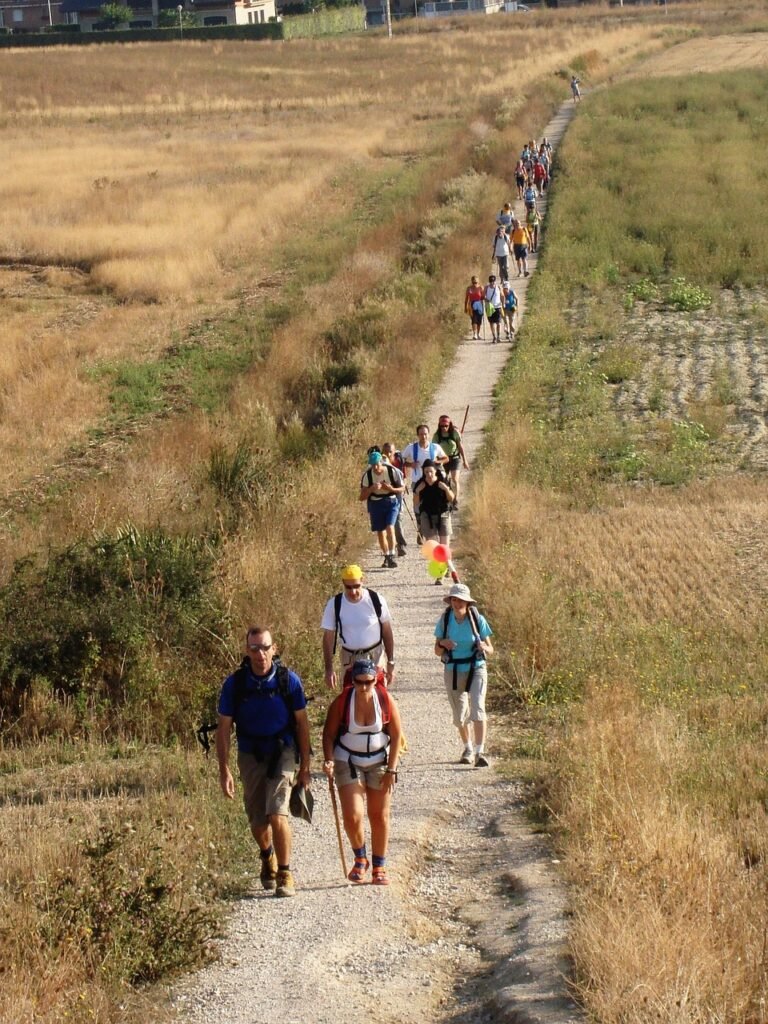
For you, the Camino is about:
- Meeting people
- Shared dinners
- Walking with new friends
- Community energy
You enjoy conversation, don’t mind crowds, and often end up in group chats by day three.
3. The Solitude & Nature Seeker
You’re walking for reflection, silence, or reconnection with nature. You don’t mind long quiet stretches and may even prefer them.
You value:
- Fewer people
- Open landscapes
- A slower, more inward experience
Crowded albergues and busy towns may feel overwhelming to you.
4. The Short-Holiday Walker
You’re limited by time, not desire. You may only have:
- 5–7 days
- Or a tight two-week window
You want the Camino experience without committing to a full month.
5. The Challenge Seeker
You’re physically fit or training for something. You actually enjoy:
- Steep climbs
- Long stages
- Tough terrain
- Weather challenges
For you, hardship is part of the meaning.
6. The Comfort-Oriented Pilgrim
You want the Camino experience, but with:
- Comfortable beds
- Private rooms
- Luggage transfer
- Good food every night
You value recovery as much as the walk itself.
The Main Camino Routes — Which One Fits You Best?
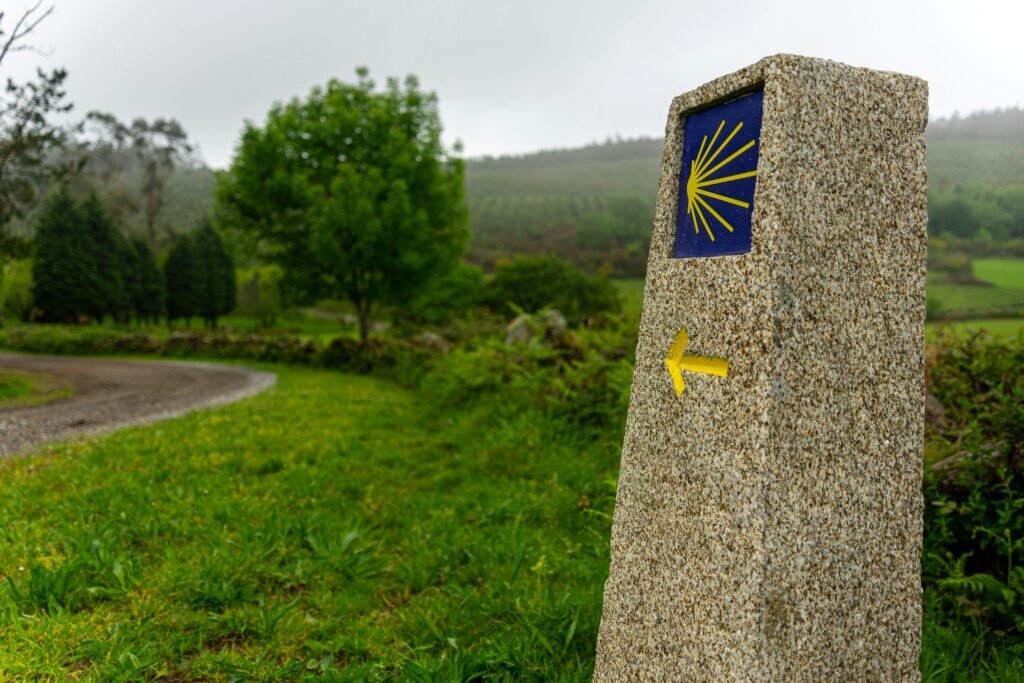
Each Camino route offers a completely different experience. Some are lively and social. Others are quiet and demanding. Some follow gentle coastal paths, others climb steep mountain passes.
There is no single “best” Camino — only the best route for your time, fitness, and personality. Below is a clear, realistic comparison of the most important Camino routes to help you choose wisely.
1. Camino Francés (The Classic Camino)
Distance: ~780 km (from Saint-Jean-Pied-de-Port, France)
Time Needed: 30–35 days
Difficulty: Moderate
Crowds: High in peak season (May–September)
Terrain: Mountains, plains, rolling hills
What It’s Like:
This is the most famous and most developed Camino route. You cross the Pyrenees, walk through historic cities, vineyards, dry Meseta plains, and eventually enter green Galicia. Infrastructure is excellent: frequent albergues, cafés, luggage transfer, and clear signage.
It’s the most forgiving route logistically and the easiest for first-timers.
Best For:
- ✅ First-time pilgrims
- ✅ Solo travelers
- ✅ Social walkers
- ✅ Anyone who wants maximum support and services
Who Should Avoid It:
- ❌People seeking solitude
- ❌Walkers who strongly dislike crowds
Vibe:
Social, international, energetic, well-supported
2. Camino Portugués (Central Route)
Distance: ~240 km from Porto
Time Needed: 10–12 days
Difficulty: Easy to moderate
Crowds: Moderate
Terrain: Flat paths, towns, gentle hills
What It’s Like:
This is the second most popular Camino route and one of the easiest physically. It passes through historic Portuguese towns before crossing into Galicia at Tui and continuing north to Santiago.
It’s calmer than the Francés but still very social and well supported.
Best For:
- ✅ Older walkers
- ✅ First-time pilgrims who want gentler terrain
- ✅ Comfort-oriented walkers
- ✅ Anyone with 10–14 days
Who Should Avoid It:
- ❌Serious challenge seekers
- ❌Walkers seeking deep wilderness
Vibe:
Relaxed, friendly, steady-paced
3. Camino Portugués Coastal
Distance: ~270 km from Porto
Time Needed: 12–14 days
Difficulty: Easy to moderate
Crowds: Moderate
Terrain: Boardwalks, beaches, coastal towns
What It’s Like:
This route follows the Atlantic coastline instead of heading inland. You walk past beaches, cliffs, fishing villages, and seaside promenades before eventually turning inland toward Santiago.
It offers stunning scenery with physically gentle walking.
Best For:
- ✅ Ocean lovers
- ✅ Photographers
- ✅ Walkers sensitive to heat
- ✅ Travelers who value scenery over famous towns
Who Should Avoid It:
- ❌ Those seeking a traditional medieval Camino feeling
- ❌ Walkers wanting dense historical sites every day
Vibe:
Bright, scenic, refreshing, coastal
4. Camino del Norte (The Northern Camino)
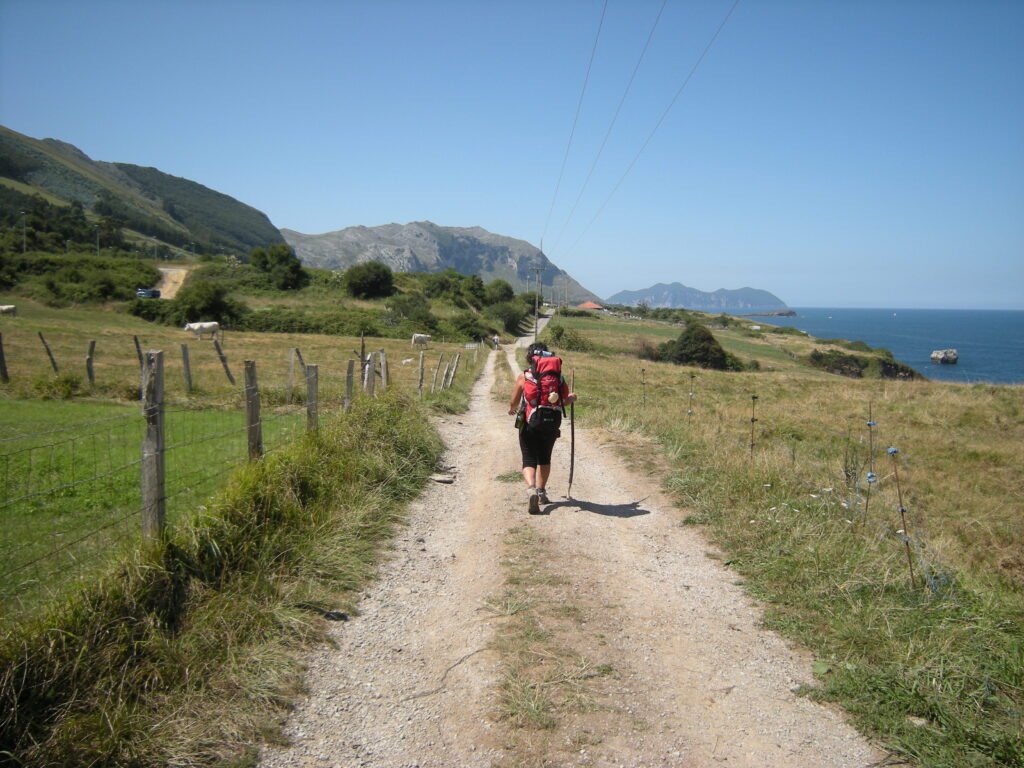
Distance: ~825 km from Irún
Time Needed: 32–36 days
Difficulty: Hard
Crowds: Low to moderate
Terrain: Steep coastal hills, cliffs, long ascents
What It’s Like:
The Norte runs along Spain’s wild northern coast. It is physically demanding, with constant elevation changes, fewer services, and more isolated stages compared to the Francés.
Scenery is dramatic and the walking is challenging.
Best For:
- ✅ Experienced walkers
- ✅ Challenge seekers
- ✅ Nature-first travelers
- ✅ Repeat Camino pilgrims
Who Should Avoid It:
- ❌ Absolute beginners
- ❌ Walkers with knee or balance issues
- ❌ Anyone needing daily town comforts
Vibe:
Rugged, demanding, scenic, quiet
5. Camino Primitivo (The Original Camino)
Distance: ~320 km from Oviedo
Time Needed: 12–15 days
Difficulty: Very hard
Crowds: Low
Terrain: Mountainous, remote, steep
What It’s Like:
The oldest historically documented Camino route — and one of the toughest. You pass through remote mountains in Asturias and western Galicia with long stages and fewer facilities.
This is not a casual walk. It’s deeply physical and intensely reflective.
Best For:
- ✅ Strong hikers
- ✅ Spiritual walkers
- ✅ Those seeking silence
- ✅ Pilgrims who’ve already walked another Camino
Who Should Avoid It:
- ❌ First-time pilgrims
- ❌ Anyone anxious about logistics
- ❌ Walkers with injuries
Vibe:
Intense, historic, solitary, transformative
6. Camino Inglés (The Short Camino)
Distance: ~120 km from Ferrol
Time Needed: 5–7 days
Difficulty: Easy to moderate
Crowds: Low to moderate
Terrain: Forest paths, rolling countryside
What It’s Like:
This is the shortest Camino that still qualifies for the Compostela if you walk from Ferrol. It remains entirely within Galicia and historically served pilgrims arriving by ship from Britain and Northern Europe.
It’s compact, manageable, and perfect for short trips.
Best For:
- ✅ Short vacations
- ✅ First-time walkers
- ✅ People testing the Camino experience
Who Should Avoid It:
- ❌ Those seeking a long spiritual transformation
- ❌ Social walkers who want big crowds
Vibe:
Compact, calm, beginner-friendly
7. Vía de la Plata (The Southern Camino)
Distance: ~1,000 km from Seville
Time Needed: 40–50 days
Difficulty: Very hard
Crowds: Very low
Terrain: Open plains, remote towns, long distances
What It’s Like:
This is the longest and most isolated major Camino route. It crosses sparsely populated interior Spain before travelers typically branch west toward Galicia.
Logistics require planning. Services can be far apart. Heat can be extreme.
Best For:
- ✅ Very experienced long-distance walkers
- ✅ Pilgrims seeking extreme solitude
- ✅ Winter walkers avoiding northern cold
Who Should Avoid It:
- ❌ First-timers
- ❌ Summer walkers
- ❌ Anyone needing daily social contact
Vibe:
Endurance-focused, silent, extreme
8. Camino Finisterre (The Camino Beyond Santiago)
Distance: ~90 km from Santiago to the coast
Time Needed: 3–5 days
Difficulty: Easy to moderate
Crowds: Moderate
Terrain: Forest paths, hills, Atlantic coastline
What It’s Like:
This route begins after Santiago. Many pilgrims continue walking west to Cape Finisterre, once believed to be the “end of the world.” It’s not required, but for many it’s the emotional conclusion of their journey.
Some walk to Finisterre, others continue to Muxía, or both.
Best For:
- ✅ Pilgrims seeking symbolic closure
- ✅ Reflection-focused travelers
- ✅ Anyone extending their Camino experience
Who Should Avoid It:
- ❌ Walkers on tight schedules
- ❌ Those physically burned out after long routes
Vibe:
Reflective, emotional, ocean-bound
Don’t Have 30–40 Days? Start with These Short Camino Walks
- ➝ Sarria to Santiago (7-Day Camino on the Francés)
- ➝ Tui to Santiago (Portuguese Route Finish)
- ➝ Valença to Santiago (Portugal Start Option)
- ➝ Lugo to Santiago (Short Camino Primitivo)
- ➝ Ourense to Santiago (Via de la Plata Finish)
- ➝ Ferrol to Santiago (Camino Inglés)
- ➝ Santiago to Finisterre (Post-Camino Extension)
If This Is Your First Camino
For most first-time pilgrims, the safest and most enjoyable starting routes are:
- Camino Francés
- Camino Portugués (Central Route)
- Camino Inglés
These offer:
- Reliable signage
- Frequent accommodations
- Easy transport access
- And plenty of fellow pilgrims for support
For your very first Camino, it’s best to avoid:
- Camino Primitivo
- Camino del Norte
- Vía de la Plata
These routes demand stronger fitness, careful planning, and comfort with long, quiet stages.
Choose by Time Available
- 5–7 days: Camino Inglés, Sarria → Santiago, Tui → Santiago
- 10–14 days: Camino Portugués (Central or Coastal), Primitivo from Oviedo
- 30+ days: Camino Francés, Norte, or Vía de la Plata
Plan Your Camino

Best Shoes for the Camino de Santiago

What is the Camino de Santiago?

Essential Camino Packing Guide: What you Really Need

Best Backpack for the Camino (2026 Guide)

How Much Does It Cost to Walk the Camino? Budget vs. Comfort Travelers
