
The Ultimate Guide to Food Festivals in Galicia
In Galicia, food festivals exist for one simple reason: people already eat these things.
The festival doesn’t introduce the food. It concentrates it. For a few days, a town cooks one thing over and over, the way it always has, and eats it publicly. When that works, it feels natural. When it doesn’t, it feels forced almost immediately.
This guide isn’t a calendar or a checklist. It’s a way to understand which food festivals in Galicia are actually worth seeking out, and what you’ll encounter when you arrive.
What a Galician Food Festival Actually Looks Like
If you’re expecting chefs, demonstrations, or curated tastings, you’ll be surprised.
Most Galician food festivals involve:
- temporary cooking setups in public spaces
- long queues that move quickly
- limited menus (often just one dish)
- people eating standing up or at shared tables
There’s usually no explanation of what you’re eating. You’re expected to already know—or to learn by eating.
That’s part of the appeal.
Festa do Pulpo, O Carballiño
This is the benchmark.
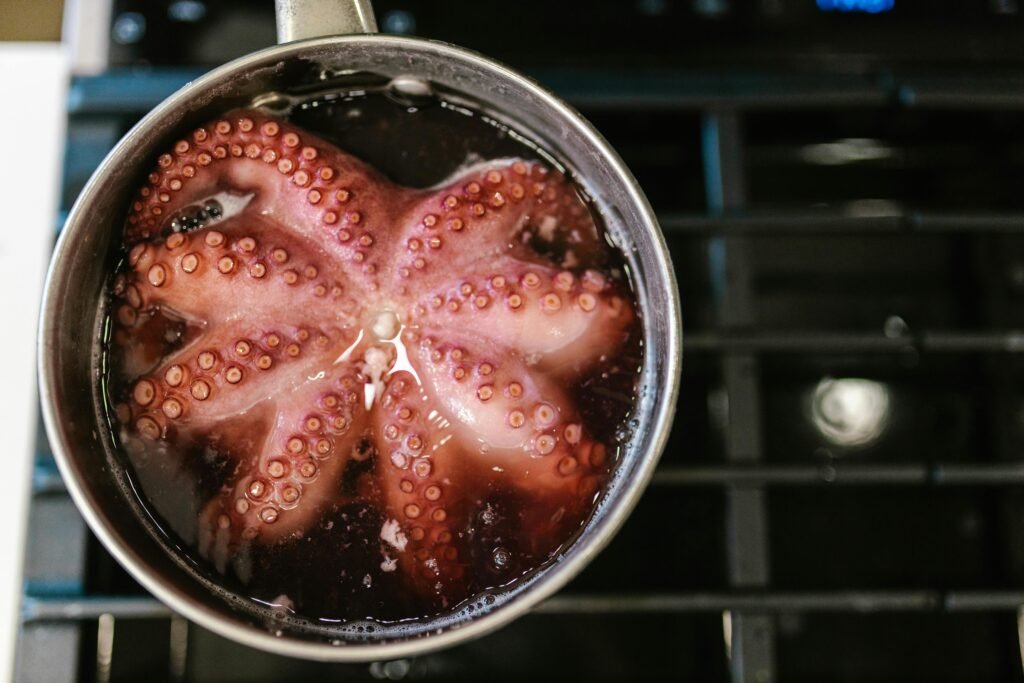
During the Festa do Pulpo in O Carballiño, the town turns into a production line for octopus. Large copper pots boil continuously. Professional pulpeiras slice octopus with scissors, season it with olive oil, paprika, and salt, and send plates out as fast as they’re ordered.
You don’t sit down for long. You eat, drink a glass of wine, and make space for the next group. There are no alternative preparations and no attempt to dress it up.
If you’ve never eaten Galician octopus before, this is where you understand it: tender, clean, and straightforward. If you already know it, this confirms what good octopus actually tastes like.
Smaller octopus festivals exist elsewhere, but O Carballiño is where the scale and execution align most reliably.
Festa do Albariño, Cambados
Albariño is Galicia’s most famous wine, and Cambados is one of the places most closely associated with it.
At the Festa do Albariño, wine tastings spill into streets and plazas. People move slowly, glass in hand, talking more than drinking. The mood is social rather than instructional. You’re not walked through flavor profiles. You taste, react, and move on.
There are concerts and official events, but the heart of the festival is simply being outside for hours, drinking the same wine everyone else is drinking.
If you enjoy atmosphere more than structure—and don’t mind crowds—this is one of the few large festivals that still feels anchored in everyday habits.
Wine Festivals Beyond Albariño
Galicia has several quieter wine festivals that feel very different.
In Ribadavia, the Ribeiro wine fair takes place in a historic town with a slower pace. People taste fewer wines and spend more time talking to producers. In Valdeorras, festivals focus on godello and slate-grown whites that rarely get attention outside the region.
These events are smaller, less polished, and more conversational. If Albariño feels too busy, these often land better.
Seafood Festivals Along the Coast
Galicia’s coast produces an overwhelming number of seafood festivals. Some are excellent. Others are forgettable.
The ones worth paying attention to tend to focus on one product, cooked plainly.
Percebes (Goose Barnacles)
Percebe festivals, often in places like Cedeira or along the Costa da Morte, are noticeably restrained. Portions are small. Prices are high. People eat slowly.
That’s because percebes are dangerous to harvest and limited by nature. When you see them served without embellishment, it usually means the festival is being run by people who respect the work behind them.
Clams, Mussels, and Shellfish
Shellfish festivals along the rías often take place in small towns or neighborhoods. You’ll see large pans, quick service, and very little ceremony.
If the shellfish tastes freshly cooked and barely handled, the festival is doing what it should. If it’s buried under sauces or presented as novelty, it probably isn’t.
Festa do Marisco, O Grove
The Festa do Marisco in O Grove is busy, loud, and unapologetically popular.
What you’ll find is range rather than focus: different types of seafood, cooked simply, served quickly, and eaten in large quantities. It’s not intimate, and it’s not subtle, but the food is real and the timing is right.
If you’re comfortable with crowds and want to try many things in one place, this is one of the few large-scale festivals that still delivers.
Cheese, Bread, and Familiar Foods
Some of Galicia’s most dependable food festivals center on things that don’t usually get attention.
In Arzúa, the cheese festival revolves around a soft, mild cheese people eat every day. In Cea, bread is celebrated not as craft but as necessity—loaves you’d recognize from any local bakery.
Empanada festivals work the same way. You’re not there to discover a new dish. You’re there to eat something familiar, made in quantity, without fuss.
Autumn and Winter Festivals
Not all food festivals in Galicia happen in summer.
Magosto, celebrated across the region in autumn, is about roasted chestnuts, wine, smoke, and cold evenings. There’s no program and nothing to photograph. People gather, eat, and leave.
Winter festivals like the lamprey festival in Arbo or the cocido festival in Lalín are heavier, more specific, and less accommodating. They’re not designed to convince anyone. If you’re curious, you’re welcome. If not, no one minds.
Other Food Festivals You’ll Encounter
If you’re moving through Galicia and see these names on a local calendar, they’re usually worth a look:
- sardine festivals in coastal towns in summer
- scallop festivals in winter, especially in Cambados
- local clam or mussel festivals along the rías
- meat-focused winter festivals in inland towns
You don’t need to chase them. Often the best ones are the ones you arrive at by accident.
How to Decide if One Is Worth Your Time
Before committing, ask yourself:
- Is this food local to this place?
- Is this when it’s normally eaten?
- Are locals eating the same thing I am?
If the answers line up, the festival usually does too.
Why These Festivals Endure
Galician food festivals don’t try to impress. They briefly make everyday eating visible—and then return to normal.
You eat what’s offered. You don’t customize it. You leave when you’re done.
That’s how they work, and that’s why the good ones feel honest.
Related Reading

Festivals in Galicia: How to Choose One Worth Going To

San Juan in Galicia: Fire, Beaches, and the Longest Night

Festivals in Galicia: A Month-by-Month Calendar

Galician Music Festivals: Ortigueira, Noroeste, and Beyond

Village Fiestas in Galicia: What to Expect (and How to Join)

The Ultimate Guide to Carnival in Galicia
