Guide to Galician Cheeses: Tetilla, Arzúa-Ulloa, and San Simón
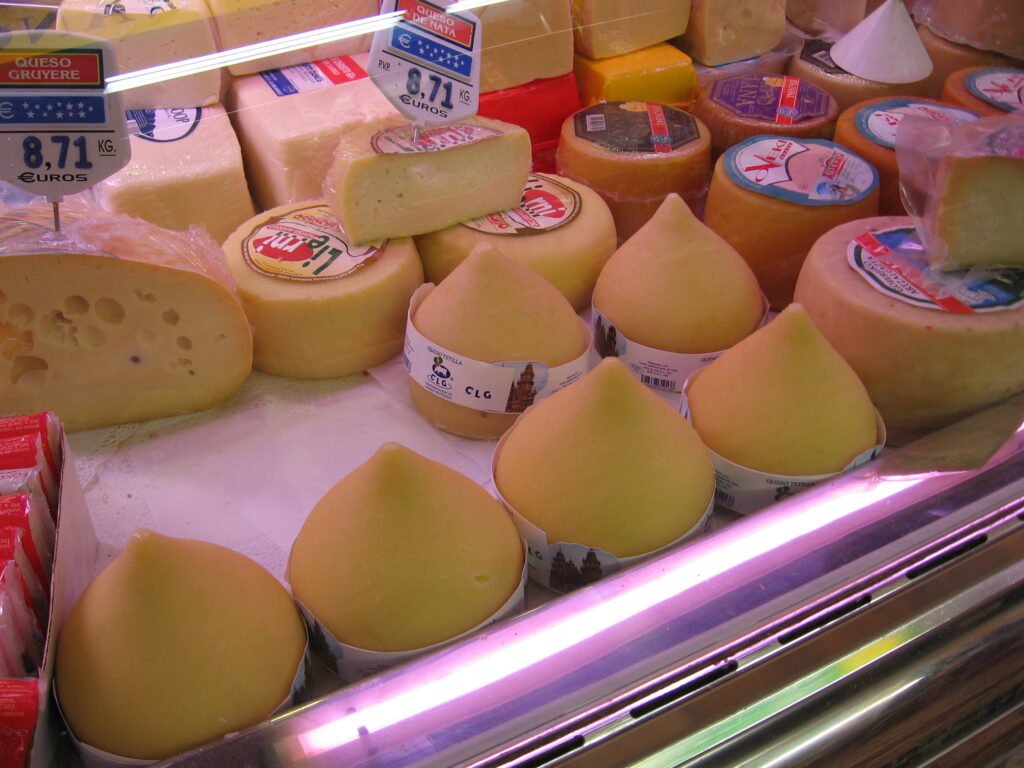
Tetilla cheese with other foods. Photo by Enrique Dans / CC BY-SA 4.0 via Wikimedia Commons.
Galicia’s cheese culture reflects the same values that define its broader food tradition: freshness, dairy quality, and understatement.
High rainfall and green pastureland make the region naturally suited to cattle farming. As a result, Galician cheeses are almost exclusively made from cow’s milk, and most are produced to be eaten young rather than aged extensively.
They are cheeses of daily life, not ceremony.
What Defines Galician Cheese as a Category
Across styles, Galician cheeses tend to share several traits:
- Cow’s milk as the base
- Soft to semi-soft textures
- Mild to moderately tangy flavor profiles
- Minimal rind development
- Emphasis on milk quality over aging technique
This makes them highly adaptable at the table — and easy to misunderstand if you’re expecting intensity.
Tetilla
Galicia’s Most Recognizable Cheese
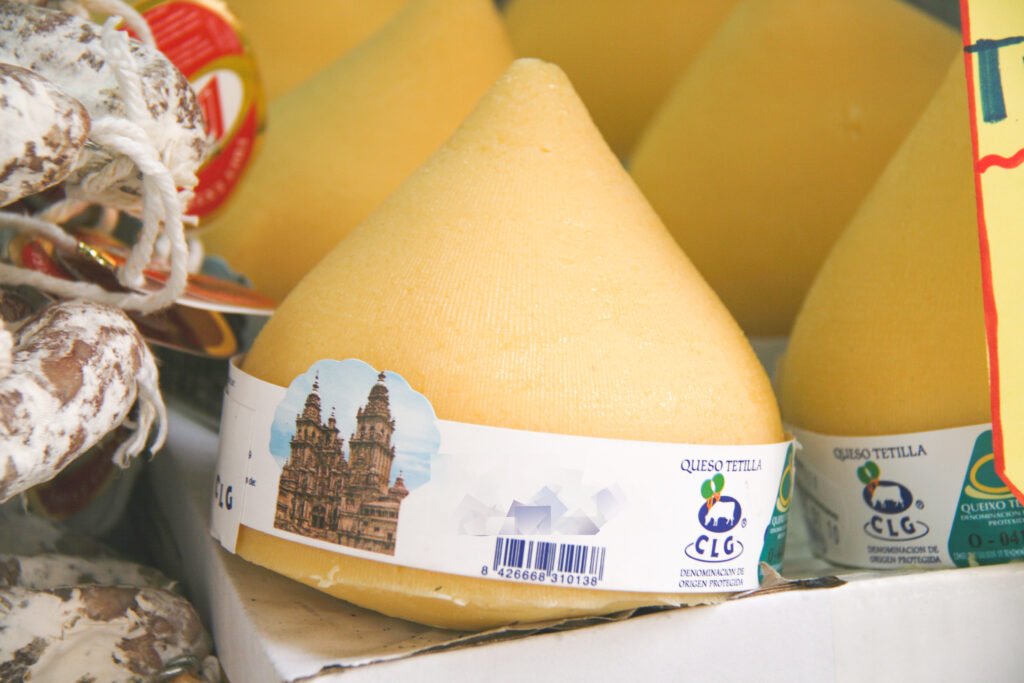
Milk: Cow
Texture: Soft, creamy
Flavor: Mild, slightly tangy, lactic
Protected status: DOP Tetilla
Tetilla is Galicia’s most widely recognized cheese, known for its distinctive rounded, conical shape and pale interior.
Despite the name, the shape is more historical than symbolic. What matters more is the texture: supple, gently elastic, and designed to melt easily.
How Tetilla is used:
- Served simply with bread
- Melted into empanadas or warm dishes
- Paired with light whites or young reds
Tetilla is not meant to dominate a plate. Its role is to soften, enrich, and complement.
Arzúa-Ulloa
The Everyday Cheese
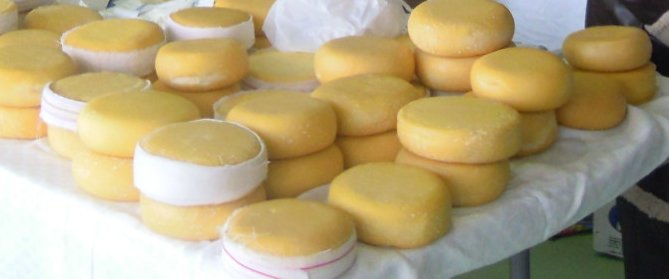
Milk: Cow
Texture: Very soft to semi-soft
Flavor: Fresh, milky, lightly acidic
Protected status: DOP Arzúa-Ulloa
Arzúa-Ulloa is arguably the most important cheese in daily Galician life, even if it’s less visually distinctive than Tetilla.
Produced in central Galicia, it reflects extremely fresh milk and minimal intervention.
Key characteristics:
- High moisture
- Clean dairy flavor
- Slight tang that increases with age
It’s commonly eaten:
- On its own, sliced thickly
- With membrillo (quince paste)
- As a finishing element at the end of a meal
Many locals prefer Arzúa-Ulloa slightly past peak freshness, when acidity becomes more pronounced.
San Simón
Smoked, But Still Subtle
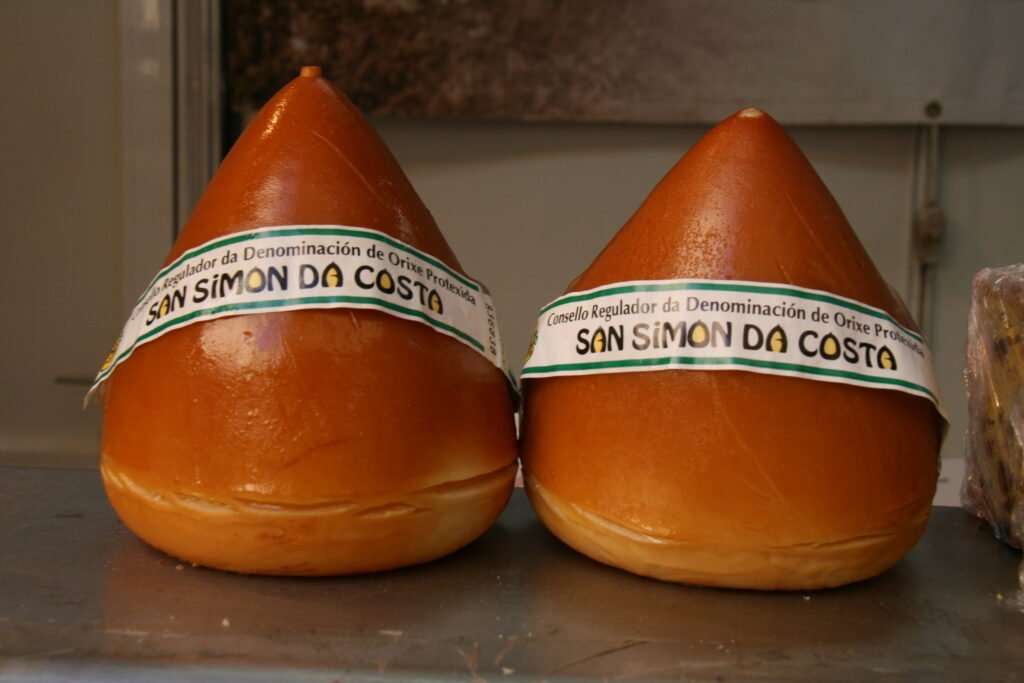
Milk: Cow
Texture: Semi-soft to semi-firm
Flavor: Buttery, lightly smoky
Protected status: DOP San Simón da Costa
San Simón stands apart from other Galician cheeses due to its smoking process, traditionally done with birch wood.
Despite the smoke, San Simón remains restrained:
- Smoke is aromatic, not aggressive
- The base cheese stays milky and balanced
- Texture firms with aging but rarely becomes hard
San Simón is often used:
- As part of a cheese board
- In cooked dishes where light smoke adds depth
- With fuller whites or lighter reds
It’s one of the few Galician cheeses that appeals immediately to non-locals — but its best examples remain elegant rather than showy.
How Galician Cheeses Are Actually Eaten
Cheese in Galicia is not usually a course of its own.
Typical contexts:
- At the end of a meal
- With bread, fruit, or membrillo
- As a simple addition to shared tables
It is rarely:
- Served as an elaborate cheese course
- Paired aggressively with wine
- Presented with detailed explanation
The expectation is simple, everyday quality rather than show.
Cheese and Wine Pairing (Keep It Simple)
Galician cheeses work best with local wines because both share restraint.
Reliable pairings:
- Arzúa-Ulloa + Albariño (freshness meets acidity)
- Tetilla + Ribeiro blends (softness and balance)
- San Simón + Godello or light Mencía (structure without heaviness)
Overthinking pairings tends to overwhelm the cheese.
Common Misconceptions
- “Galician cheeses are bland.”
→ They are subtle, not bland. - “They’re all interchangeable.”
→ Texture differences matter more than flavor intensity. - “They should be aged longer.”
→ Freshness is the point.
Final Perspective
Galician cheeses reflect the region they come from: green, wet, restrained, and practical. They are designed to fit into daily life rather than stand apart from it.
Approached on those terms, Tetilla, Arzúa-Ulloa, and San Simón offer a clear window into Galicia’s food culture — one defined less by intensity than by balance.
Related Reading
13 Essential Galician Dishes to Try
What is Galician Cuisine? A Complete Beginner’s Guide
Galician Food vs. Spanish Food: What Makes It Unique?

Best Restaurants in Ferrol (2026)