
Camino Clothing: What to Wear, What to Skip, and Why It Works
Most of these items aren’t technical in the mountaineering sense — they’re chosen because they tolerate repeated use, wash easily, and stay comfortable across changing conditions.
Most pilgrims don’t struggle because they’re underprepared. They struggle because they packed for the wrong idea of the Camino—imagining either relentless heat or constant rain, instead of the quieter, changeable reality in between.
What works isn’t specialized gear. It’s a simple, adaptable system that handles long walking days, shifting weather, and repeated wear without friction.
This is how that system works—and what you can safely ignore.
Understanding Camino Weather (Especially in Galicia)
By the time most routes reach Galicia, patterns emerge:
- Moderate temperatures
- Rain possible year-round
- Cool mornings and evenings
- Weather that can change within hours
Even in summer, Galicia rarely behaves like southern Spain. Heat happens, but it isn’t the norm. Far more common is damp air, cloud cover, wind, and light rain—especially near the coast.
The practical takeaway is straightforward:
layering matters more than insulation, and rain protection matters more than warmth.
The Core Principle: Fewer Pieces, More Flexibility
The best Camino clothing systems share one trait: restraint.
You don’t need many items. You need the right few, chosen to work together. Every extra piece adds weight, laundry time, and mental clutter.
A reliable rule:
If you don’t wear it every one or two days, it probably doesn’t belong.
Walking Layers: What You Wear Most of the Day
Your primary walking clothes should prioritize comfort, moisture management, and repeat use.
Cotton performs poorly here. It absorbs sweat, dries slowly, and feels cold when damp—an issue in Galicia’s climate.
Most pilgrims do best with:
- one or two quick-dry or merino tops
- lightweight walking shorts or trousers
- underwear designed to reduce friction
Merino earns its reputation not because it’s fashionable, but because it tolerates repeated wear, manages odor, and stays comfortable across temperature swings.
You don’t need fresh clothes every day. You need clothes that don’t mind tomorrow.
Weather Protection: The Non-Negotiable Layer
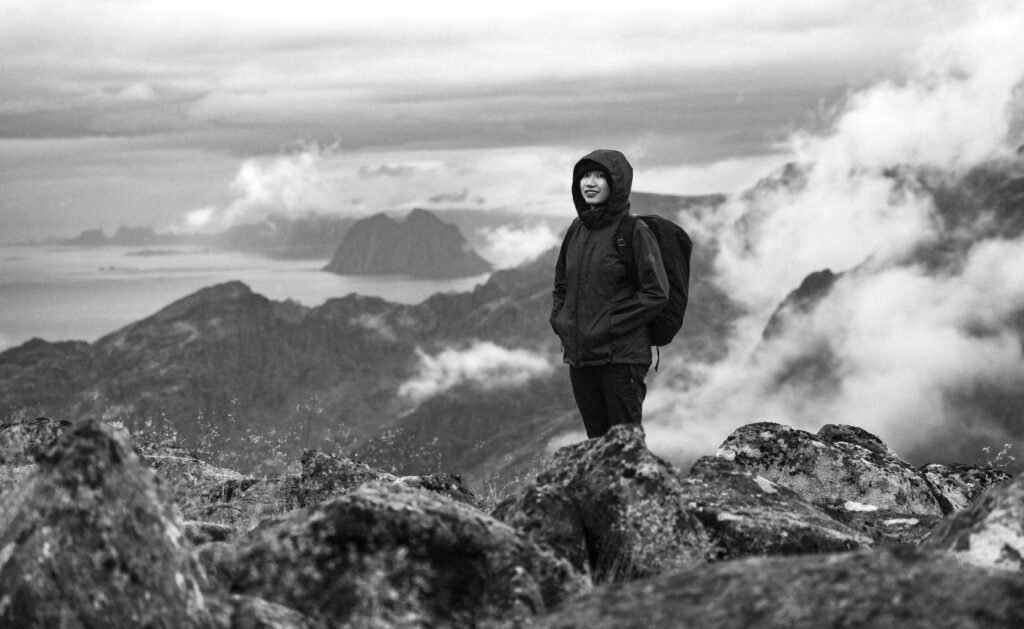
Rain on the Camino is rarely dramatic. It’s persistent and inconvenient—the kind of weather that erodes comfort slowly if you’re unprepared.
A proper rain layer should:
- keep you dry
- block wind
- pack down small
Heavy jackets built for mountaineering are unnecessary. What matters is a lightweight waterproof shell you can put on quickly when conditions shift.
Rain pants are optional, but in Galicia they’re often appreciated, especially outside peak summer. Wet legs lead to wet socks, and wet socks end Caminos faster than cold ever will.
Insulation: Less Than You Expect
Many first-time pilgrims overpack warmth.
On most Caminos:
- mornings start cool
- walking warms you quickly
- evenings cool down again
A single light insulated layer—used at breakfast, rest stops, or at night—is usually enough. The goal isn’t to stay warm while walking. It’s to stay comfortable around walking.
Bulky fleeces and heavy jackets spend most of the Camino unused, except as weight.
Small Items That Quietly Matter
A few small pieces do more work than they appear to:
- a hat for sun and rain
- a lightweight neck buff for wind or warmth
- good socks, rotated carefully
Socks deserve special mention. On the Camino, they’re part of foot care, not an accessory. Performance or merino socks dry faster, cushion impact, and reduce friction—often preventing problems shoes can’t fix.
Two or three pairs, rotated daily, is usually enough.
What You Can Skip (With Confidence)
The Camino doesn’t reward excess preparation.
Most people can skip:
- multiple heavy layers
- spare “just in case” outfits
- technical winter gear outside winter Caminos
- clothing that doesn’t tolerate sweat or rain
Laundry is frequent. Towns are close. Replacements are easy to find in Spain if something fails.
Packing for wilderness self-sufficiency usually just adds weight.
Dressing for Route Length
Short routes allow flexibility. You can pack lighter, wash often, and accept small inconveniences.
Long Caminos reward consistency. Wearing the same core system day after day reduces friction—physical and mental.
In both cases, the principle holds: what you wear most often matters more than what you pack for rare scenarios.
The Advantage of Simplicity
The Camino strips routines down. Clothing becomes functional rather than expressive. That isn’t a loss—it’s part of the experience.
When your clothing works, you stop thinking about it. When it doesn’t, it dominates your day.
The pilgrims who walk most comfortably are rarely the most geared-up. They’re the ones who chose a small system that fits the Camino as it actually is—not the version they imagined at home.
Seasonal Notes (Quick Reference)
Spring (March–May)
Cool mornings, frequent rain. Prioritize a waterproof shell and an insulating mid-layer.
Summer (June–September)
Warm days, cooler evenings, less rain but not none. Breathability matters more than warmth; keep rain protection light.
Autumn (October–November)
Shorter days, cooler temperatures, higher chance of sustained rain. Rain gear and warmth matter again.
Where to Go Next
If you want specific product recommendations—rain shells, insulation layers, socks, and weather gear—those live in the Camino Essentials shop, curated separately.
This article is about how to think about clothing on the Camino.
The shop is about what to choose once you’re ready.
Plan Your Camino

Best Shoes for the Camino de Santiago

Which Camino Route is for You?

Essential Camino Packing Guide: What you Really Need

Best Backpack for the Camino (2026 Guide)

What is the Camino de Santiago?
