
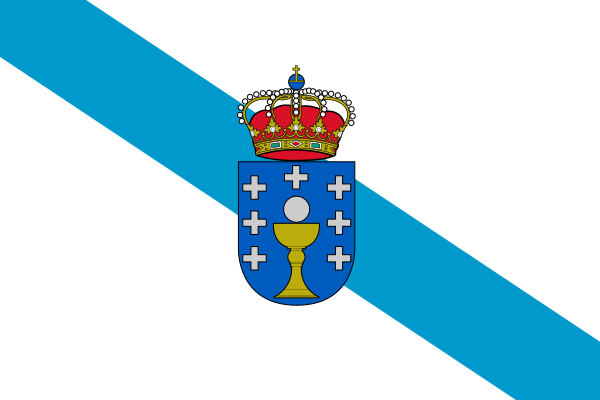
The Galician Language: What Visitors Should Know
Galicia has its own language.
Not a dialect. Not an accent. A language with its own grammar, history, literature, and living presence in everyday life.
For visitors, Galician is not something you need to master — but understanding what it is, where you’ll hear it, and what it represents adds real depth to traveling through the region. It explains street signs, conversations you overhear in cafés, and much of Galicia’s cultural identity.
What Is Galician?
Galician (galego) is a Romance language spoken primarily in Galicia, in northwestern Spain.
It developed from medieval Galician-Portuguese, the language once used across much of the Atlantic coast of the Iberian Peninsula. Over time, Galician and Portuguese evolved separately, but they remain closely related — close enough that speakers can often understand each other in writing, and partially in speech.
Today, Galician is:
- Co-official with Spanish in Galicia
- Used in schools, media, administration, and public life
- Spoken daily by a large portion of the population
It is not a rural relic or a symbolic language kept alive for tradition. It is very much alive.
Galician vs Spanish: What You’ll Notice as a Visitor
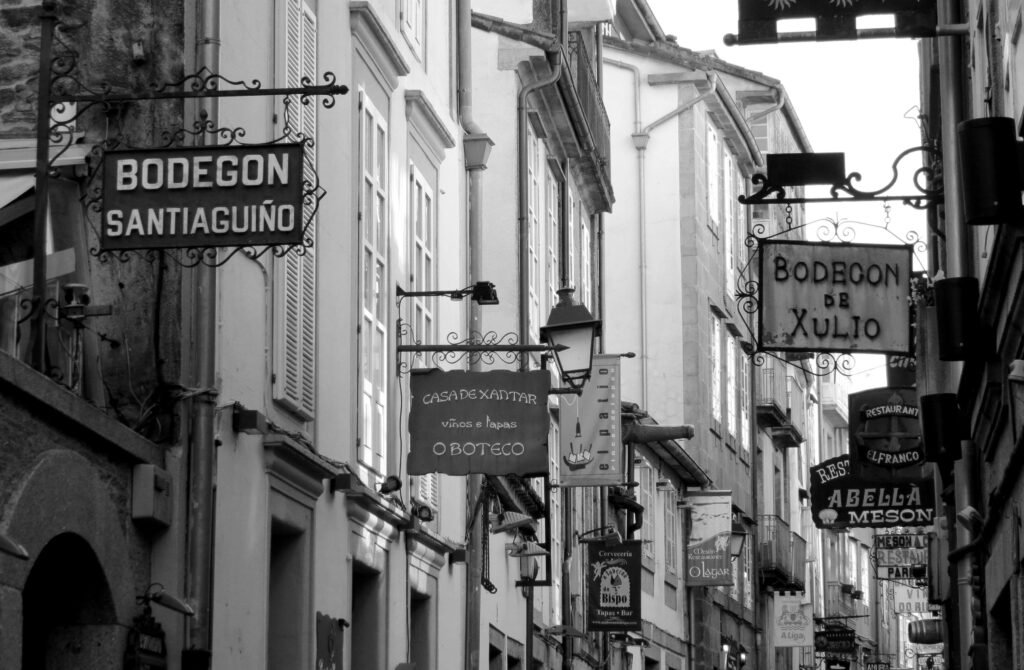
Most people in Galicia are bilingual. They switch comfortably between Galician and Spanish depending on context, habit, or personal preference.
As a visitor, you’ll notice Galician most often in:
- Street signs and place names
- Public announcements
- Local media
- Casual conversations, especially among locals
Spanish is universally understood, and you can travel through Galicia without speaking a word of Galician. But hearing it — and recognizing it — is part of understanding where you are.
Galician often looks familiar to Spanish speakers, but sounds softer and more melodic, with strong Atlantic influences and a rhythm closer to Portuguese.
Where You’re Most Likely to Hear Galician
Usage varies by place and generation.
You’ll hear more Galician:
- In smaller towns and villages
- In rural areas
- Among older generations
- In informal, everyday settings
You’ll hear more Spanish:
- In larger cities
- In formal or professional contexts
- In tourist-facing interactions
That said, even in cities like A Coruña, Santiago, or Vigo, Galician is part of the soundscape. It’s not unusual to hear one person speak Galician and the other reply in Spanish — with no friction at all.
What Galician Represents (Beyond Language)
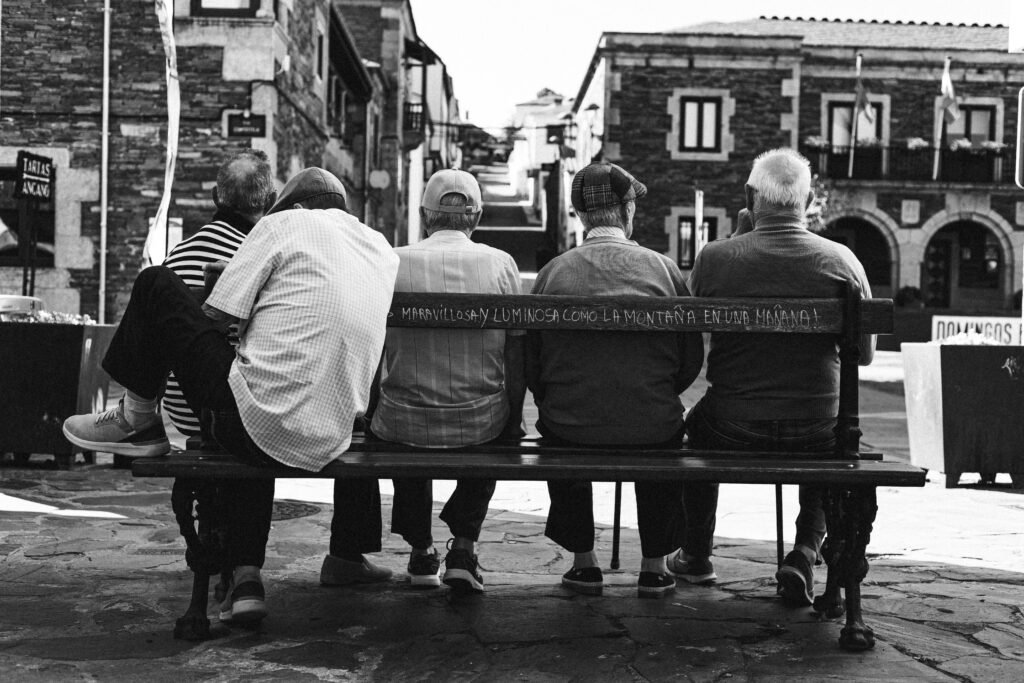
Galician is deeply tied to regional identity.
For many locals, speaking Galician is:
- a connection to place
- a marker of cultural continuity
- a quiet statement of belonging
Its use declined during parts of the 20th century, particularly under political pressure, but has since seen a strong revival through education and public policy.
Today, Galician is not about exclusion or nationalism. It’s about preserving something local in a globalized world.
A Few Galician Words You’ll See and Hear
You don’t need to memorize these — but recognizing them helps orient you.
- Boas – Hello / Hi
- Grazas – Thank you
- Bos días – Good morning
- Boas noites – Good evening / Good night
- A rúa – The street
- O mar – The sea
- A choiva – The rain
You’ll notice articles like o, a, os, as instead of Spanish el, la, los, las — one of the easiest visual cues that you’re reading Galician.
Should Visitors Try to Speak Galician?
There is no expectation that you do.
But even a simple “grazas” instead of gracias is often met with a smile. Not because it’s impressive, but because it shows awareness.
More importantly, recognizing Galician — knowing that it exists, that it’s intentional, that it’s meaningful — already puts you closer to understanding the place you’re visiting.
Galician Today: Alive, but Under Pressure
Galician is very much a living language — but it is also under pressure.
While most people in Galicia understand Galician, fewer people speak it as their primary language, especially among younger generations and in urban areas. Spanish increasingly dominates daily life, media consumption, and informal communication, even among people who grew up bilingual.
This shift doesn’t mean Galician is disappearing overnight. It does mean that its role is changing.
In many families, Galician is no longer the default language passed down at home. In cities, it can be heard less often in casual conversation than it was a generation ago. The result is a language that remains present in public life — schools, signage, institutions — while gradually losing ground as a first language in everyday use.
At the same time, there are strong efforts to maintain it:
- Galician is taught throughout the school system
- It is used in public administration and regional media
- Writers, musicians, and cultural institutions continue to create in Galician
So the reality is layered: Galician is not a relic, but it is not fully secure either.
Understanding that tension helps explain why the language matters so deeply to many people here — and why its presence in daily life carries cultural weight beyond simple communication.
A Final Thought
You don’t need Galician to travel in Galicia.
But knowing that it exists — and understanding the space it occupies today, between continuity and change — alters how you experience the region.
Languages carry memory.
Galician carries Galicia — even as it adapts to a quieter, more fragile place in everyday life.
Related Reading

Galicia’s Celtic Heritage: What It Really Means Today

Everyday Life in Galicia: Pace, Meals, and Social Rituals

The Sea in Galician Culture: Coast, Weather, and Mentality

Religion in Galicia: Tradition More Than Belief
