
Best Things To See in Santiago de Compostela
Santiago de Compostela is small, walkable, and shaped by one defining reality: people have been arriving here on foot for over a thousand years.
Pilgrims, students, locals, and visitors all share the same compact old town, where stone streets, religious buildings, and everyday life overlap naturally. It’s a city best experienced slowly, without trying to see everything.
This guide highlights the places that genuinely matter — organized so you can move through the city at an unhurried pace.
Cathedral of Santiago de Compostela
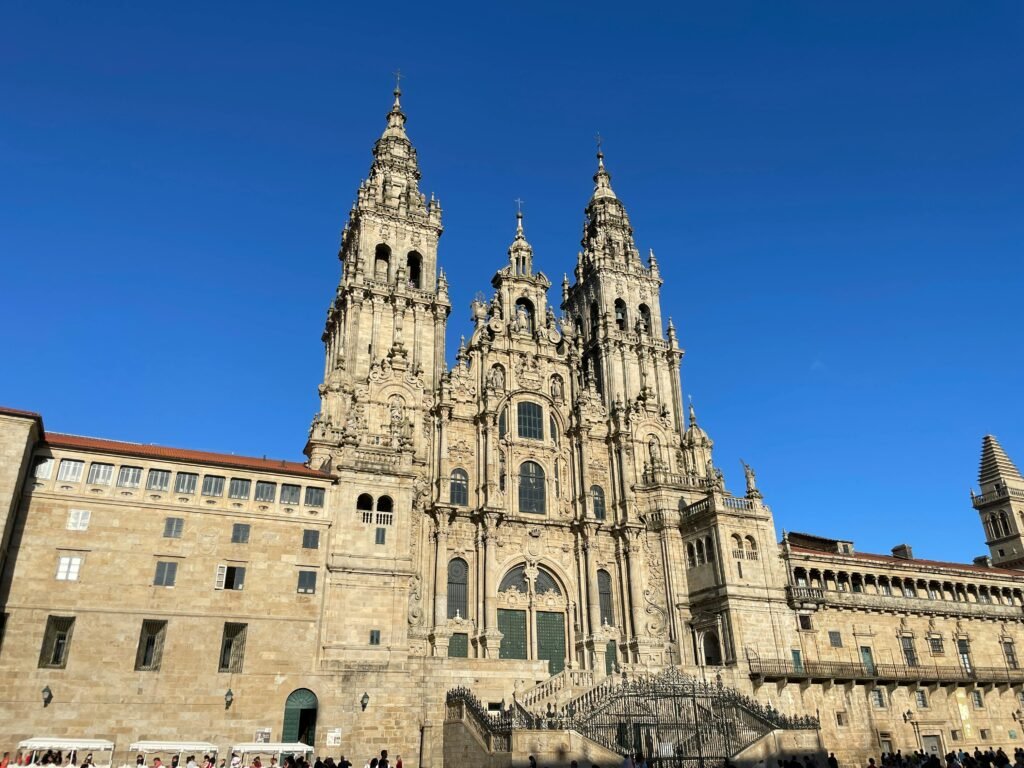
Everything in Santiago ultimately leads to the cathedral.
It is dedicated to Saint James the Apostle, whose remains are believed to be buried here, and it has been one of the most important Christian pilgrimage destinations for over a thousand years — alongside Rome and Jerusalem. For pilgrims, it marks the end of the Camino de Santiago; for the city itself, it defines its identity.
Construction began in 1075 and the cathedral was consecrated in 1211. Its structure is primarily Romanesque, with later Gothic and Baroque additions. The most recognizable exterior is the Obradoiro façade, which faces the city’s main square.
Inside, the space is quieter and more contemplative than the exterior suggests. On special religious occasions, the Botafumeiro — one of the largest incense burners in the world — is swung across the transept during services.
Visiting the cathedral:
The cathedral is open daily, generally from 7:00 to 21:00, with free entry via Praza de Platerías. Some areas, such as the Pórtico de la Gloria, the museum, and the roof walk (cubiertas), require a ticket and advance booking, and availability varies throughout the year.
The cathedral and Santiago’s historic center are part of a UNESCO World Heritage Site.
Praza do Obradoiro
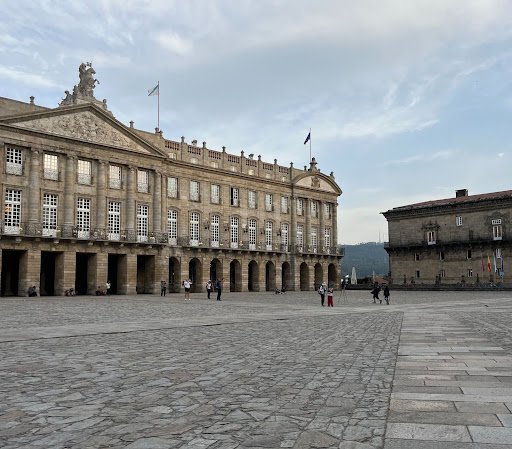
Praza do Obradoiro is Santiago’s main square and the city’s most symbolic open space. This is where pilgrims finish their journey, visitors stop to take in the cathedral façade, and the scale of Santiago’s religious and civic history becomes clear.
Facing the cathedral is the Pazo de Raxoi, built in 1766 under Archbishop Raxoi and now used as Santiago’s City Hall. To one side stands the Hostal dos Reis Católicos, widely considered the oldest hotel in Spain. It was originally founded by the Catholic Monarchs as a hospital for pilgrims and later converted into a luxury hotel. The building includes several interior patios and a chapel, though interior visits may be limited during restoration periods.
Even without going inside, Obradoiro is a place to pause — especially early in the morning or in the evening, when the square feels calmer and less crowded.
The Old Town Squares
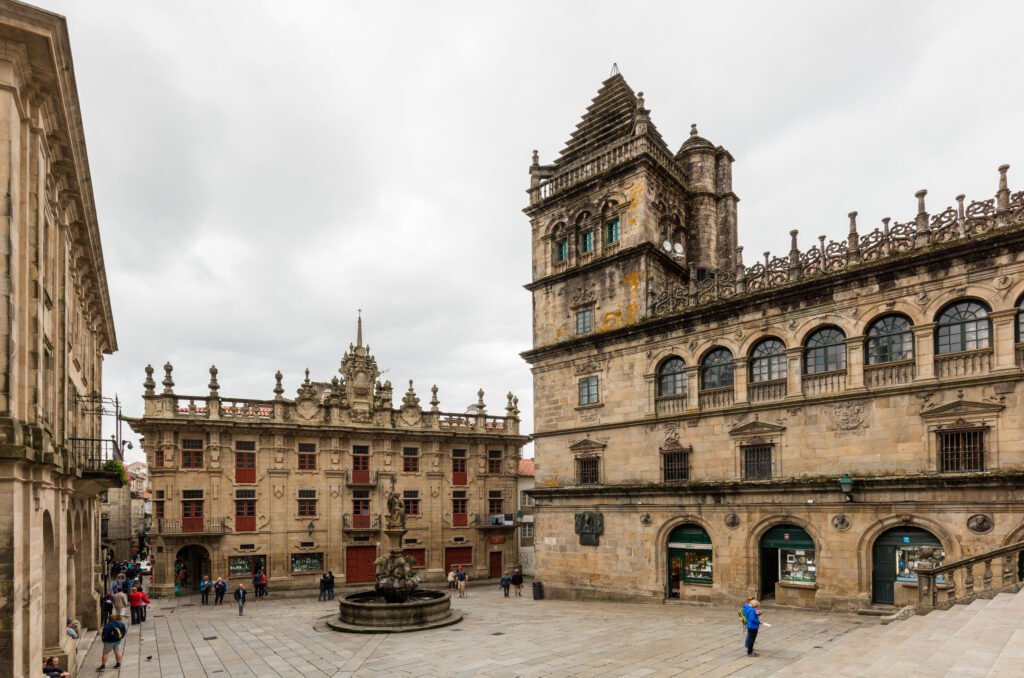
Santiago’s historic center unfolds through a series of interconnected stone plazas.
- Praza da Quintana is one of the most atmospheric, especially in the evening. The cathedral’s Holy Door opens here during Holy Years.
- Praza de Platerías is livelier, centered around the Fountain of the Horses and close to the Pilgrims’ Office, where walkers collect their Compostela certificate.
- Praza da Inmaculada sits on the quieter northern side of the cathedral, dominated by the Monastery of San Martín Pinario.
They’re close together and easy to explore without a plan.
Rúa do Franco
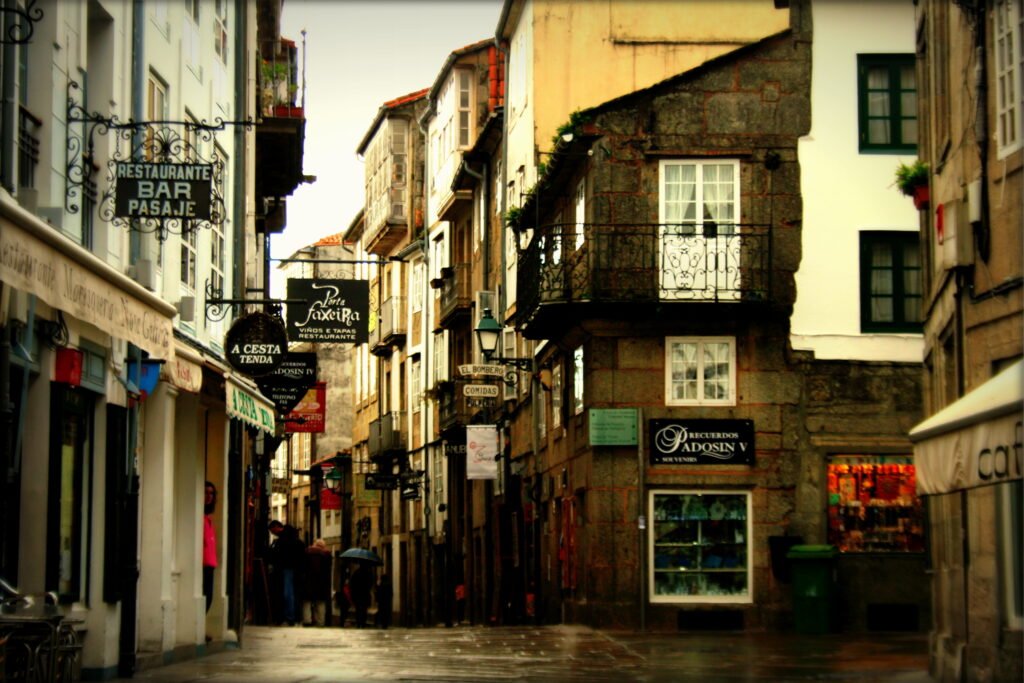
Rúa do Franco is Santiago’s most classic food street.
It connects the edge of the old town with the cathedral and is lined with traditional restaurants, wine bars, and casual places serving Galician staples. It’s lively most evenings and a reliable choice for a first meal in the city.
For specific recommendations, see our guide to where to eat in Santiago de Compostela (coming soon).
University Buildings & Quiet Corners
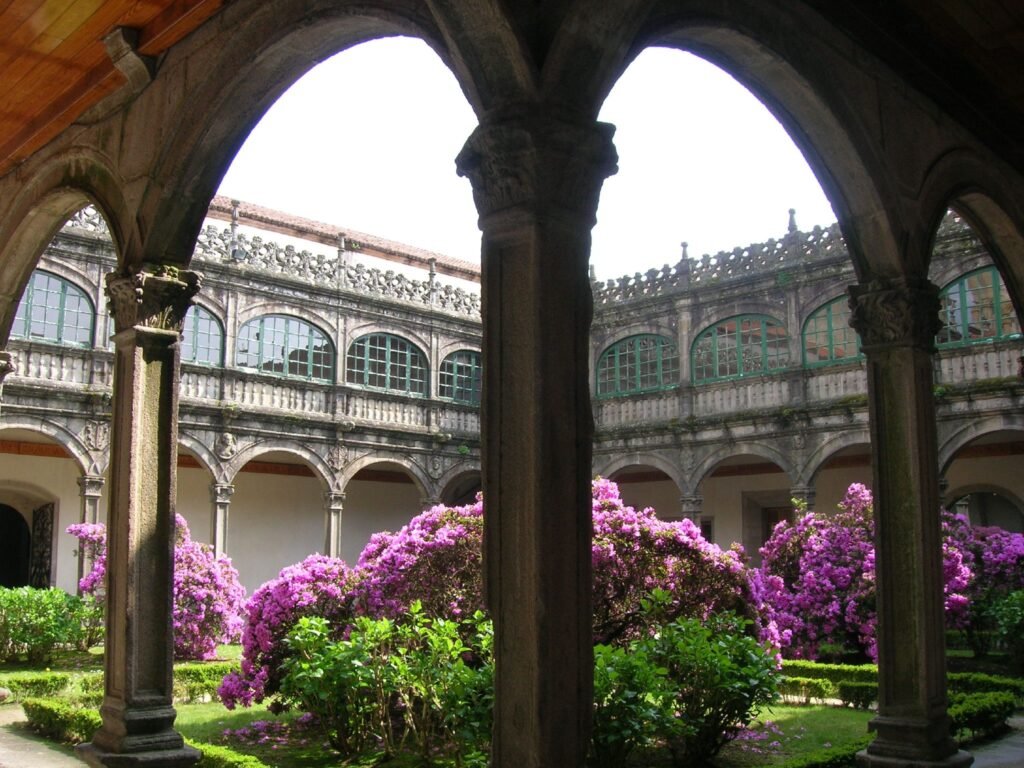
Santiago is also a university city, and that influence shows in its rhythm.
The Pazo de Fonseca, one of the earliest university buildings, now serves as a library. Its interior courtyard is open and makes for a calm pause near the cathedral.
Nearby, the Árbol de la Ciencia sculpture references medieval ideas about knowledge, while Praza de Cervantes functions as a practical crossroads within the old town.
Alameda Park
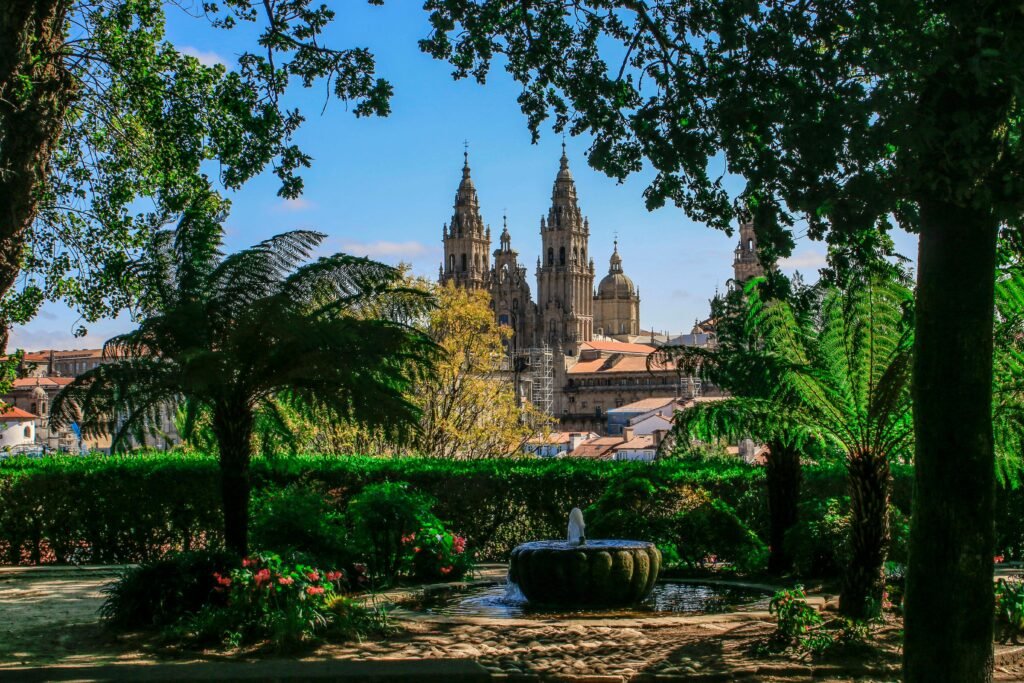
Parque de la Alameda sits directly beside the historic center, just a few minutes’ walk from the cathedral and Praza do Obradoiro. It’s one of the easiest places to step out of the old town without actually leaving it.
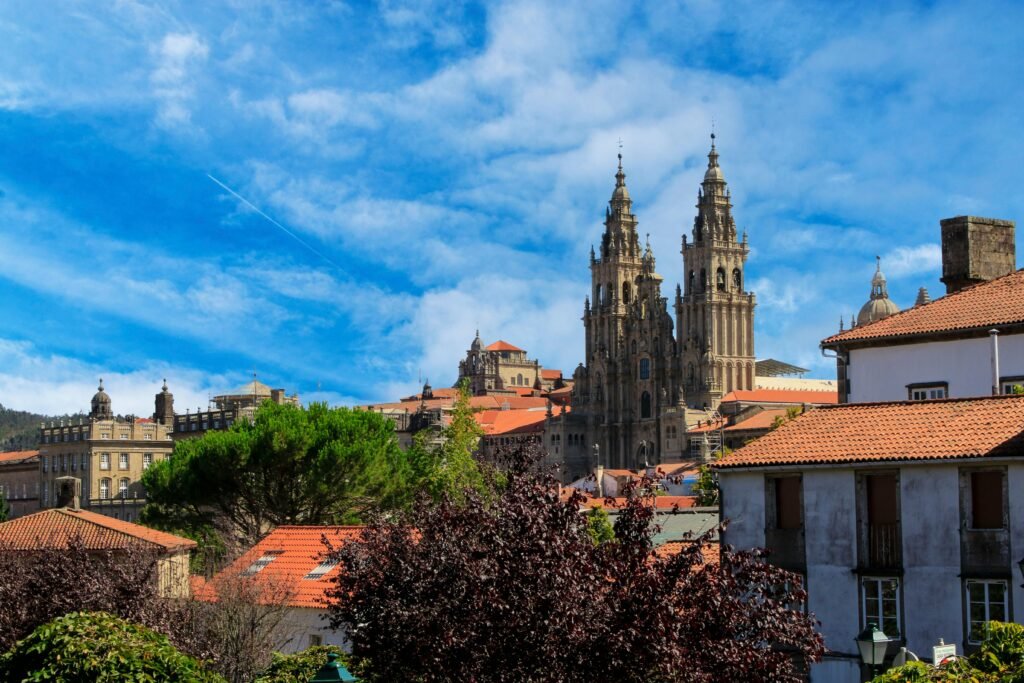
The park is known for its views of the cathedral skyline, especially from the Paseo dos Leóns, where a statue of Valle-Inclán sits on a bench facing the city. From here, the towers of the cathedral rise above the rooftops, making this one of the most photographed viewpoints in Santiago.
Inside the park, a network of paths loops through gardens, fountains, and shaded areas. Notable spots include:
- Xardíns da Ferradura, a curved garden path with fountains and views
- Monumento a Rosalía de Castro and Monumento a Manuel Ventura Figueroa
- Monumento ás Marías, one of the city’s most recognizable sculptures
- Palco da Música, used for concerts and events
- Escalinata and Capilla de Santa Susana, set on a small wooded hill that feels surprisingly removed from the city despite its central location
Alameda works well at almost any point in the day — as a short break between sights, a sunset walk, or a calm pause after time in the cathedral area.
Convento de San Francisco
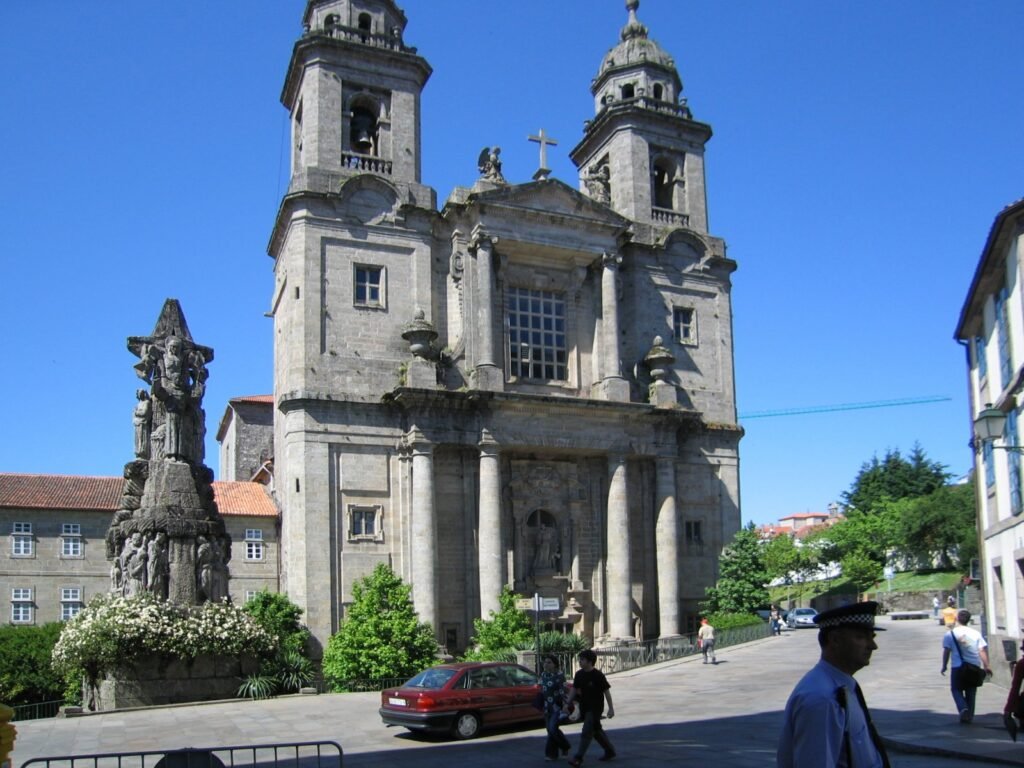
A short walk from the old town, the Convent of San Francisco provides a calmer counterpoint to the cathedral area.
According to tradition, Saint Francis of Assisi visited Santiago in the 13th century. Today, pilgrims can receive an additional certificate — the Franciscan Compostela — by showing their Camino credential.
Mercado de Abastos
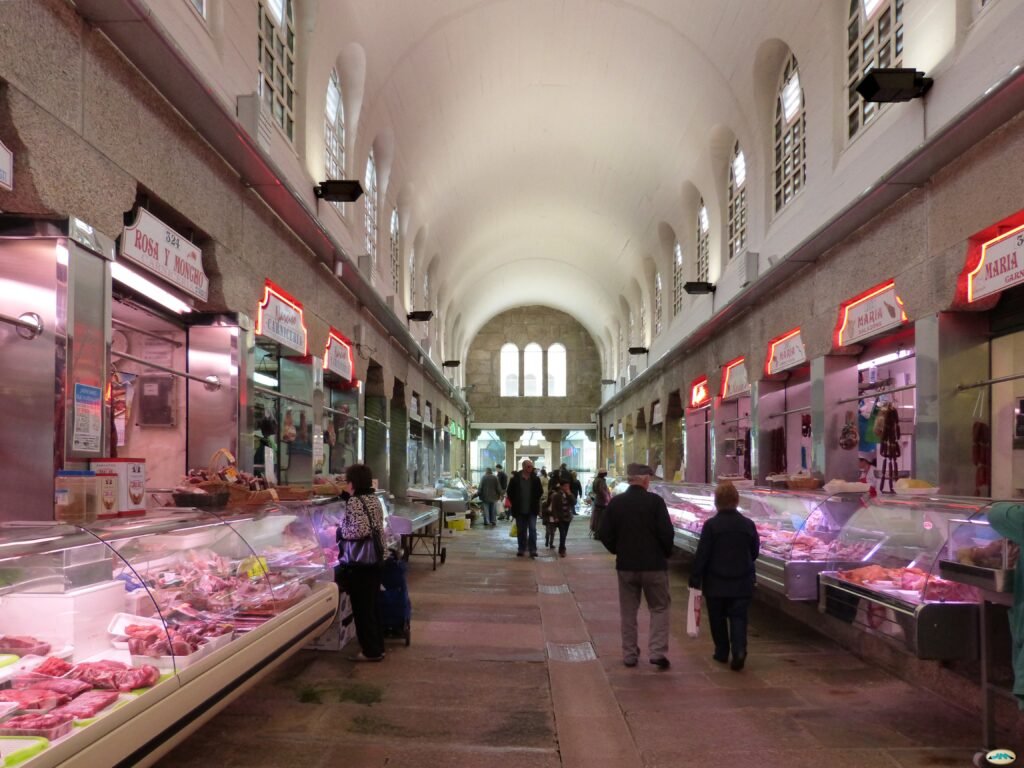
Just a few minutes’ walk from the cathedral, the Mercado de Abastos is Santiago’s main food market and one of the best places to see everyday local life.
The market is open Monday to Saturday, roughly 7:00–16:00, with the surrounding bars and restaurants typically operating from late morning into the afternoon. Traditional stalls sell Galician products such as cheeses, cured meats, seafood, liquors, and tarta de Santiago.
What makes the market especially worthwhile is the restaurant area, where fresh ingredients from the stalls are cooked and served on the spot. It’s one of the most reliable places in the city to try Galician food in a casual, authentic setting. (Check out our Guide to Galician Cuisine article)
Parque de Bonaval, Museo do Pobo Galego, & Parque de Belvís
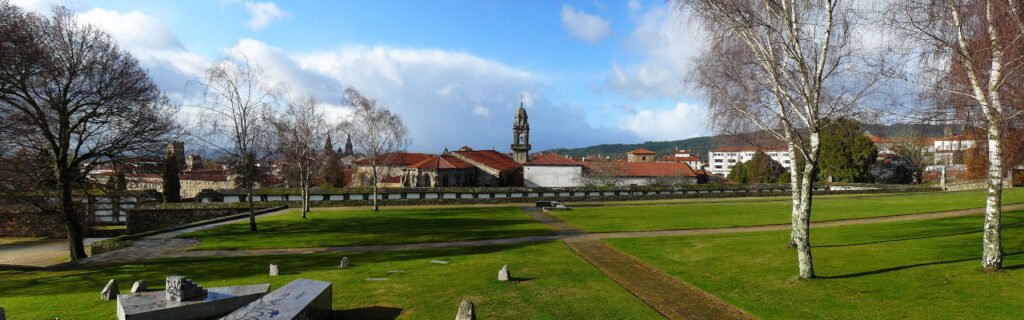
A short uphill walk from the old town leads to one of Santiago’s most rewarding areas.
The Museo do Pobo Galego, housed in the former Convento de Santo Domingo de Bonaval, offers insight into Galician history, culture, and traditions, with sections covering archaeology, folk life, art, and rotating temporary exhibitions.
Behind the museum, Parque de Bonaval stretches across a hillside that was once a cemetery. Today it’s one of the city’s most relaxed green spaces. Open lawns, stone paths, and terraced slopes make it a favorite place for picnics, reading, and watching the sun set. From parts of the park, you can see the cathedral towers rising above the old town rooftops.
Continuing beyond Bonaval brings you to Parque de Belvís, which feels quieter and less visited. The park includes old walls, open grass, a small river, and the Convento de la Virgen del Portal. It’s not essential on a short visit, but it’s a good option if you want space and calm without leaving the city. Nearby, Pub Momo is known for one of the nicest terraces in Santiago.
Monte do Gozo (For Pilgrims)
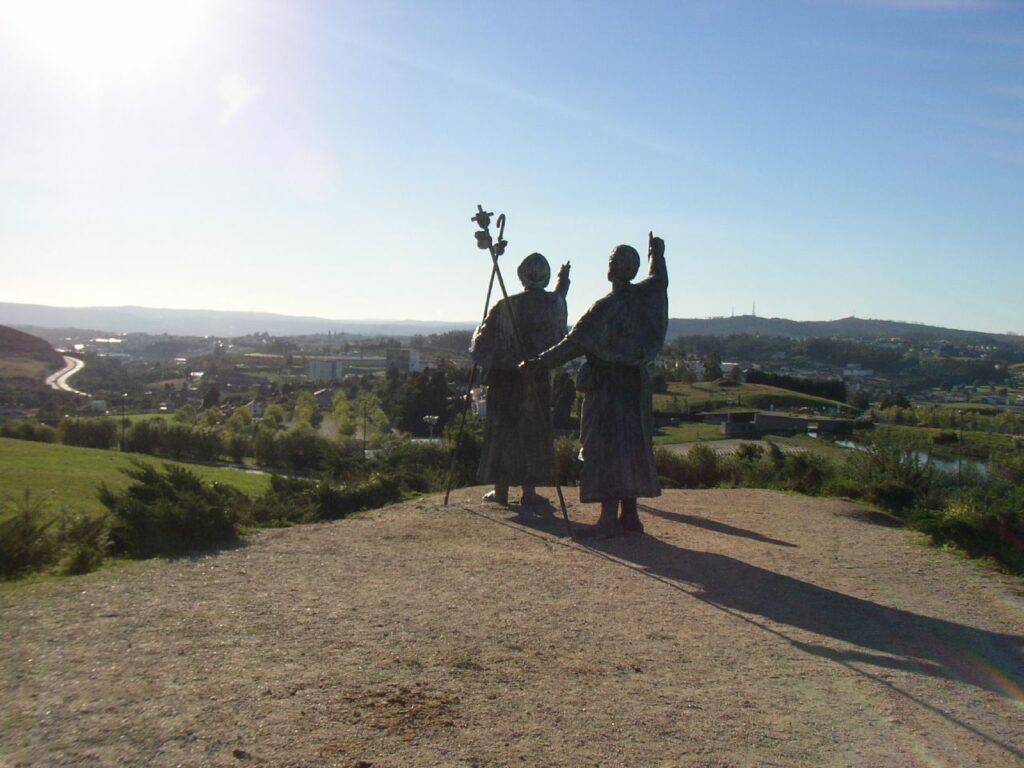
Located on the outskirts of Santiago, Monte do Gozo holds strong symbolic meaning for pilgrims. It’s traditionally the first place where walkers catch a distant view of the cathedral towers, marking the emotional beginning of the end of the Camino.
For those who have spent days or weeks walking toward Santiago, the viewpoint carries real weight. For general visitors, however, it’s less compelling and sits far enough from the historic center that it’s best considered optional.
Monte do Gozo is reachable by bus, taxi, or a longer walk from the city. It’s worth including if you’re finishing the Camino — otherwise, Santiago’s most rewarding experiences remain closer to the old town.
How Much Time You Need
Santiago works best without rushing.
- One full day is enough for the cathedral, old town, Alameda, and a good meal.
- Two days allows time for markets, parks, and museums at a slower pace.
The city is compact and easy to explore entirely on foot.
Getting Around the City
Santiago de Compostela is easy to get around on foot. The historic center is compact and largely pedestrian, and most major sights are within walking distance.
For places just outside the old town — such as Alameda Park, Bonaval, Belvís, or Monte do Gozo — public buses are reliable, and taxis are affordable. A car isn’t necessary for visiting the city and can be more of a hassle than a help.
Map of Key Sights in Santiago de Compostela

What To See in A Coruña

The 7 Cities of Galicia Explained

Best Beaches in Galicia

The Cíes Islands: Visiting Galicia’s Most Beautiful National Park

Ultimate Guide to Ribeira Sacra
