
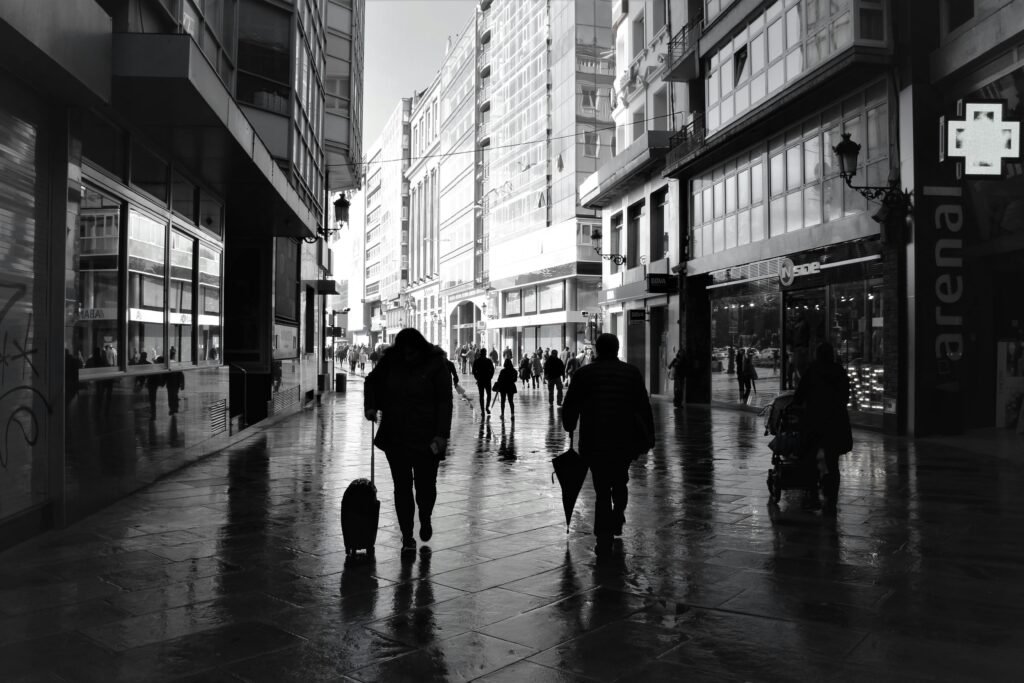
7 Cities of Galicia Explained
Galicia doesn’t revolve around one massive metropolis. Instead, it’s shaped by a network of seven official cities, each with its own identity, history, and role in the region. Some face the open Atlantic, others grew around Roman walls or thermal waters, and one stands at the spiritual heart of the Camino de Santiago.
Together, these seven cities form the cultural, economic, and administrative backbone of Galicia. This guide breaks down what makes each one unique and which might be right for your style of travel.
Vigo
Quick Facts:
| Province: | Pontevedra |
| Population (2024): | 294,000 |
| Known for: | Fishing port, Cíes Islands, industrial economy |
| Setting: | Coastal bay |
What Makes it Special:
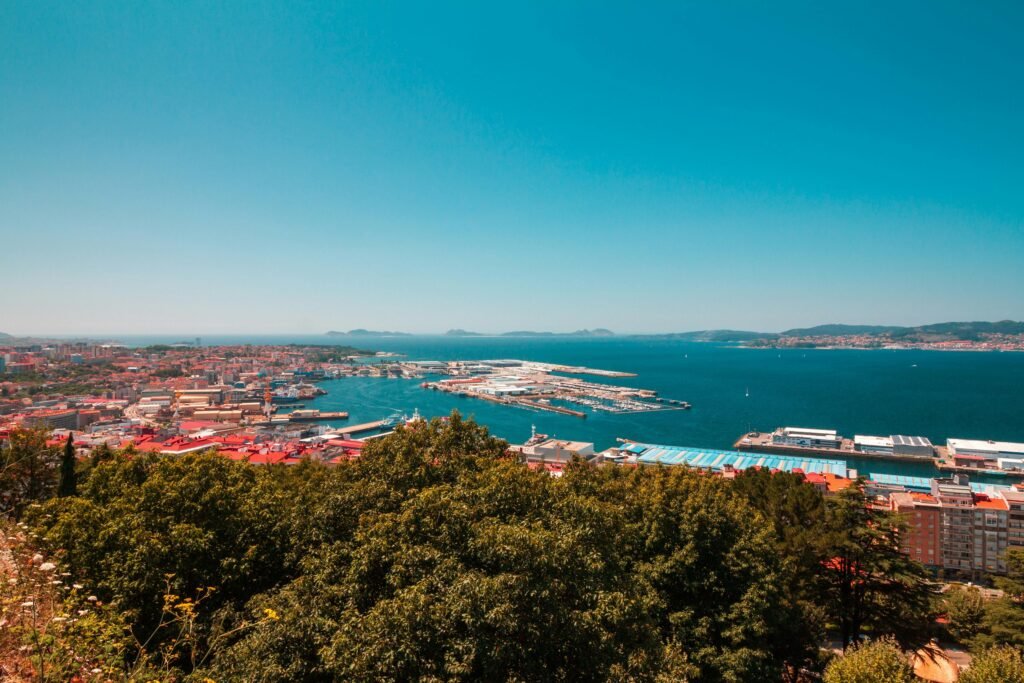
Vigo is Galicia’s largest city and its most industrious, shaped by the rhythm of ships, cranes, and ocean tides. It grew rapidly from a fishing village into a powerful industrial port, and today it remains Spain’s busiest fishing harbor. The city climbs steep hills above a deep Atlantic bay, creating dramatic viewpoints and layered neighborhoods.
Unlike the postcard-perfect old towns elsewhere in Galicia, Vigo feels raw, working, and modern. Yet just offshore lie the Cíes Islands, often called the “Galician Caribbean,” with white sand beaches and crystal waters. This contrast — heavy industry on one side, protected island paradise on the other — defines Vigo’s dual identity. It is restless, practical, and alive with motion, where seafood traditions and urban nightlife collide.
Top Things to See & Do:
- Take a boat trip to the Cíes Islands
- Walk the Castro Fortress for panoramic views
- Explore seafood restaurants near the port
- Enjoy nightlife in city center
Best for: Island excursions, seafood lovers, nightlife, and urban coastal life.
A Coruña
Quick Facts:
| Province: | A Coruña |
| Population (2024): | 249,261 |
| Known for: | Atlantic port, urban beaches, Roman lighthouse, fashion |
| Setting: | Coastal peninsula |
What Makes it Special:
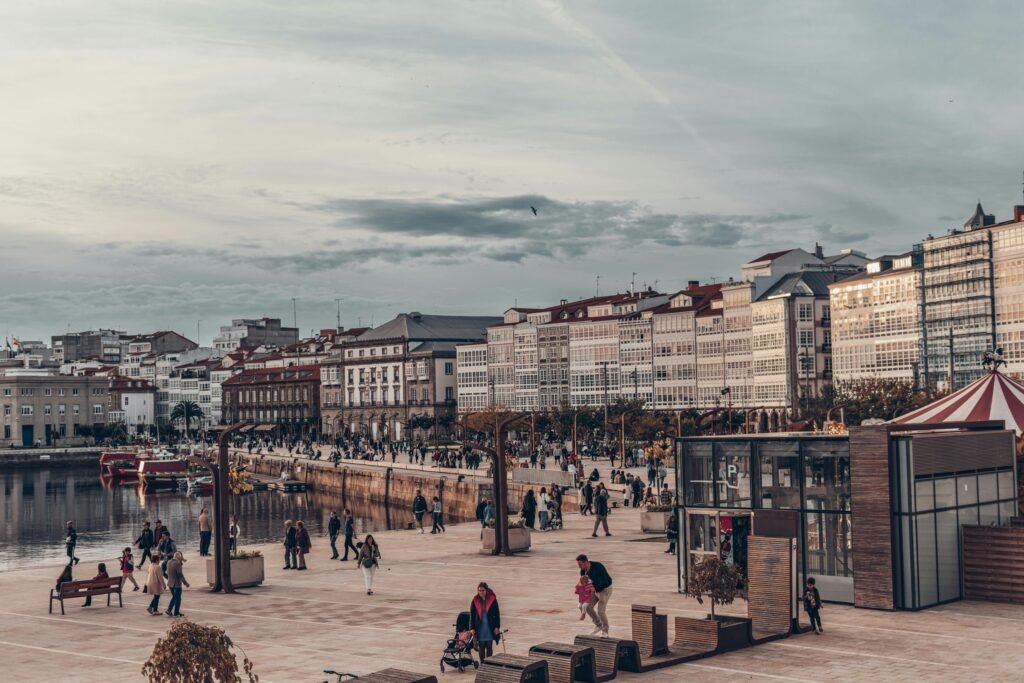
Coruña lives in constant dialogue with the Atlantic. Waves crash against its long seaside promenades, salt air drifts through the old town, and the horizon never feels far away. Shaped by centuries of maritime trade, defense, and fishing, the city has grown into one of Galicia’s most modern and outward-looking urban centers.
Its iconic glass-fronted harbor buildings, the galerías, earned it the nickname “The City of Glass.” By day, locals jog along the promenade and surfers ride Atlantic swells; by night, seafood restaurants glow along the port. The ancient Torre de Hércules, still guiding ships after nearly 2,000 years, quietly anchors the city’s deep Roman past to its contemporary coastal energy. A Coruña feels vibrant without being overwhelming — modern, maritime, and proudly Galician.
Top Things to See & Do:
- Walk to the Torre de Hércules, the world’s oldest working Roman lighthouse
- Relax at Riazor & Orzán Beaches
- Explore the Old Town (Ciudad Vieja)
- Catch views from Monte San Pedro
Best for: Beach lovers, food-focused travelers, coastal walks, and first-time visitors to Galicia
Ourense
Quick Facts:
| Province: | Ourense |
| Population (2024): | 104,725 |
| Known for: | Thermal baths, Roman bridges, hot springs |
| Setting: | Inland river valley |
What Makes it Special:
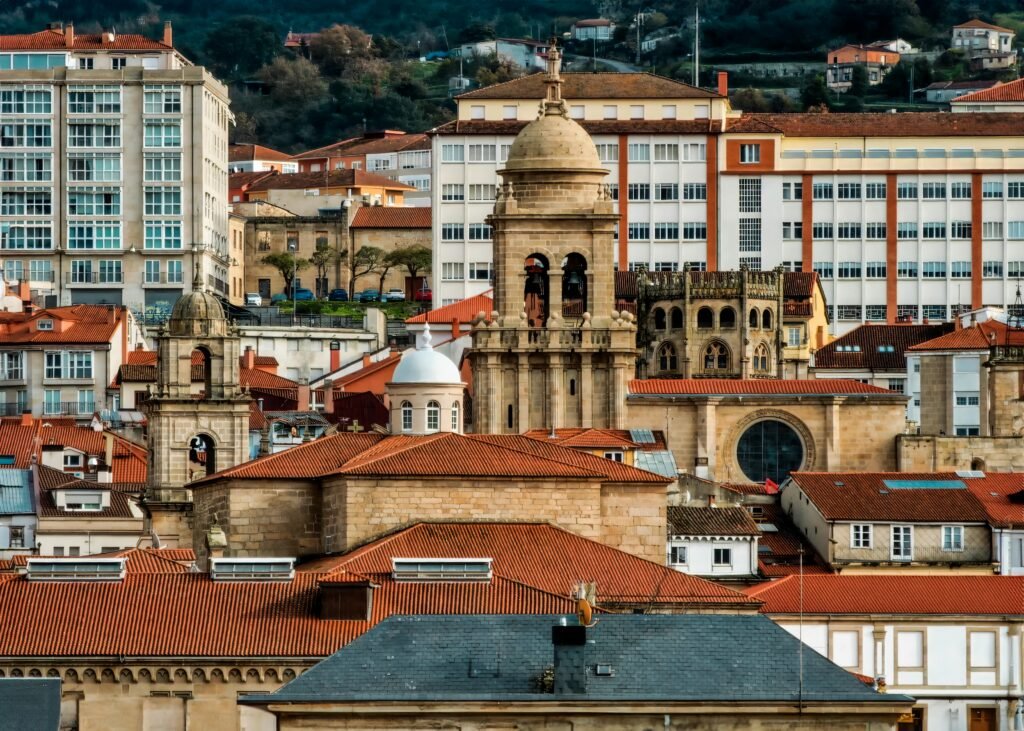
Ourense is shaped by heat and water. Natural thermal springs rise directly from the ground along the Miño River, steaming even in winter, a tradition that dates back to Roman times. Few cities in Europe allow you to soak in public hot springs beneath open skies, just steps from the historic center.
The city’s Roman bridge, stone streets, and compact old town reflect its ancient origins, but the atmosphere is relaxed and social. Locals gather in plazas for wine and tapas before heading to the baths in the evening. Ourense feels intimate, warm, and restorative, a city built around the rhythms of wellness, conversation, and slow living.
Top Things to See & Do:
- Soak in the Outariz Thermal Baths
- Walk the historic Roman Bridge
- Explore the compact old town
- Enjoy wine and tapas in lively plazas
Best for: Thermal spas, relaxation, Roman heritage, and slower city stays
Lugo
Quick Facts:
| Province: | Lugo |
| Population (2024): | 99,482 |
| Known for: | Roman walls (UNESCO), historic calm |
| Setting: | Inland plateau |
What Makes it Special:
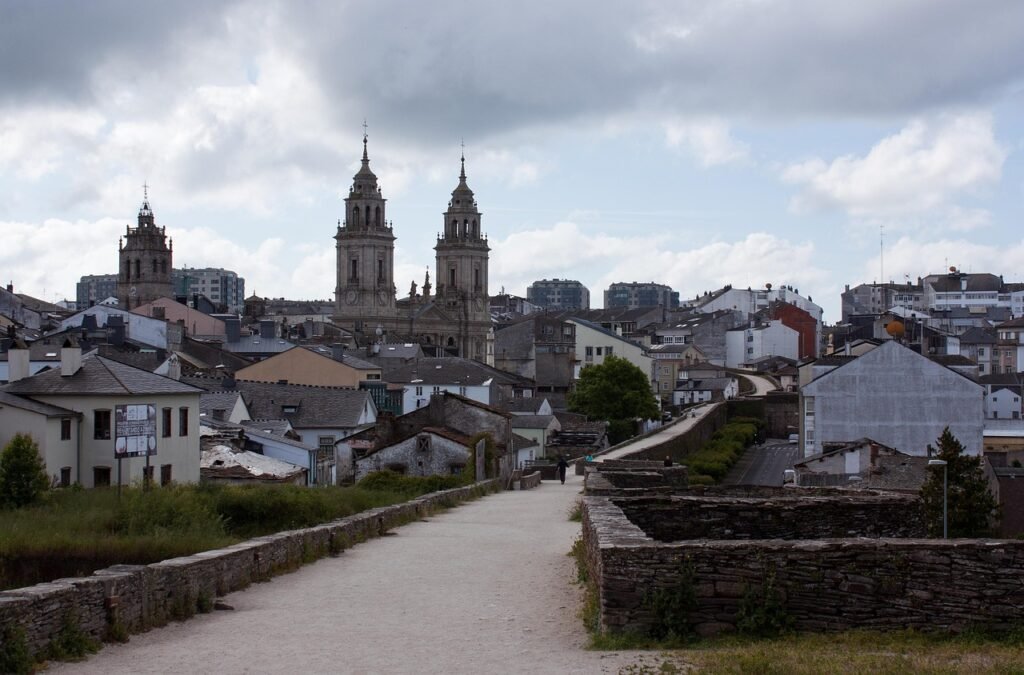
Lugo feels like a city enclosed in time. Its massive Roman walls still completely encircle the historic center, just as they have for nearly two millennia. Walking atop the stone ramparts gives you a rare perspective- one foot in ancient Rome, the other in a living Galician city.
Unlike the bustle of the coast, Lugo moves slowly and confidently. Life here centers on small plazas, local cafés, and intimate taverns serving traditional dishes. The city carries its history quietly, without spectacle or crowds. It is a place for travelers who enjoy texture over noise, depth over speed. Lugo doesn’t compete for attention, it rewards those who linger.
Top Things to See & Do:
- Walk the Roman Walls of Lugo
- Explore the historic city inside the walls
- Visit the Cathedral of Santa María
- Enjoy classic Galician taverns
Best for: Roman history, slow travel, quiet exploration, and traditional city life.
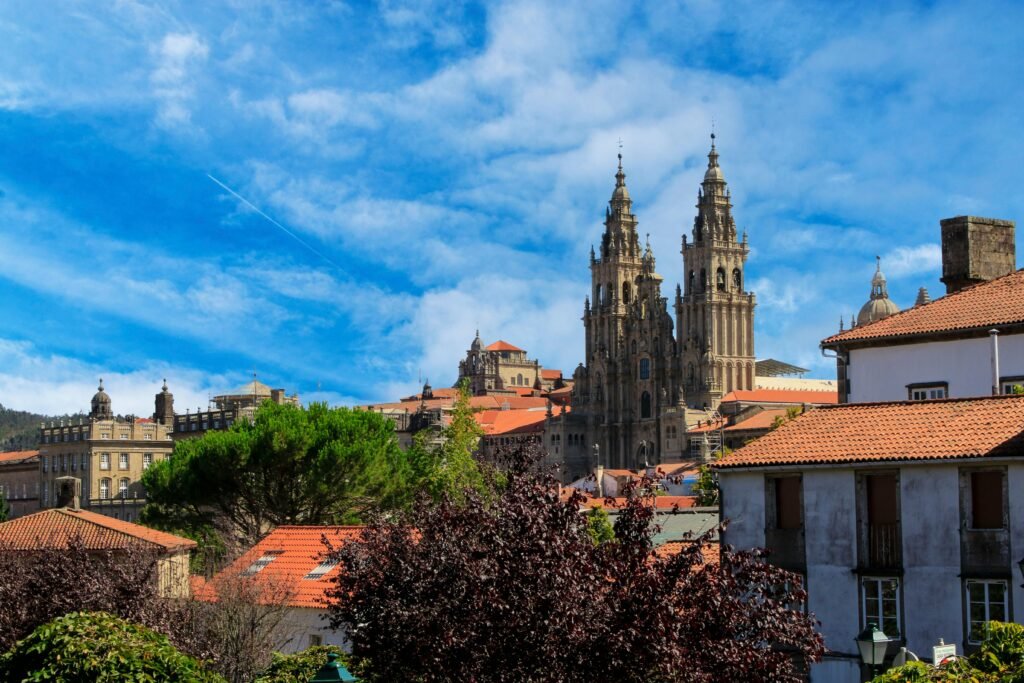
Santiago de Compostela
Quick Facts:
| Province: | A Coruña |
| Population (2024): | 95,092 |
| Known for: | Camino de Santiago, cathedral, pilgrimage culture |
| Setting: | Inland, rolling hills |
What Makes it Special:
Santiago exists at a crossroads of faith, culture, and human movement unlike any other city in Galicia. For more than a thousand years, pilgrims from across Europe have followed ancient paths to its cathedral, arriving footsore, reflective, and transformed. That constant arrival of people has shaped the city’s soul.
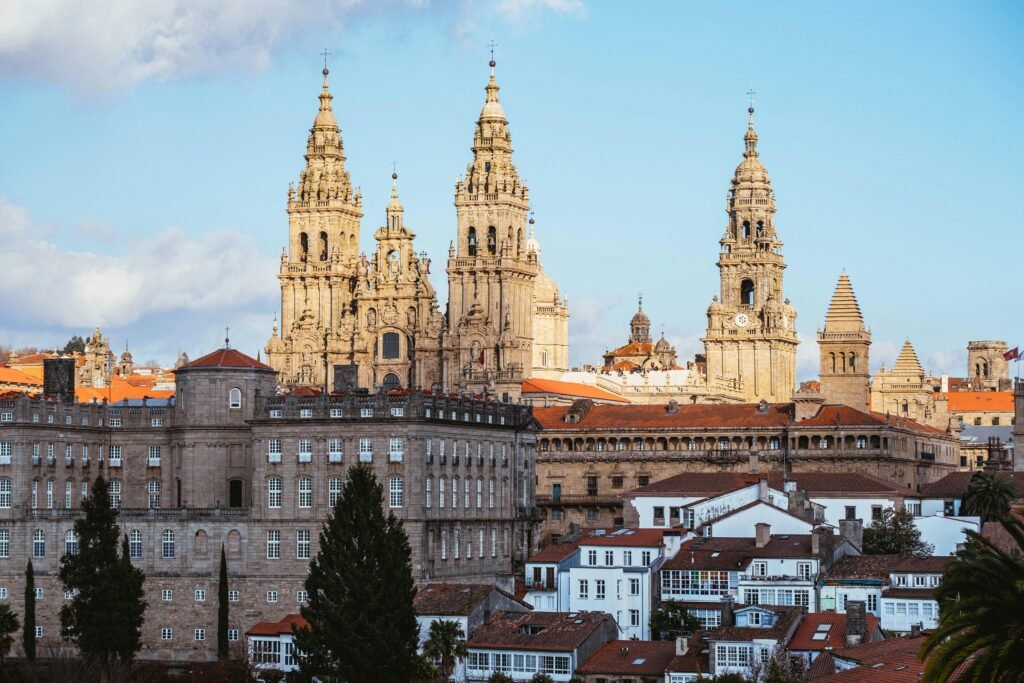
Stone streets wind through a beautifully preserved medieval center, echoing with footsteps, guitar and gaita (bagpipes) music, and the murmur of conversations in dozens of languages. The grandeur of the Cathedral of Santiago dominates the skyline, but it is in the surrounding plazas, arcades, and cafés where the city truly lives. Santiago feels timeless yet alive — a place where history isn’t displayed behind glass, but actively unfolding every day through the ritual of arrival.
Top Things to See & Do:
- Visit the Cathedral of Santiago
- Experience the atmosphere of Praza do Obradoiro
- Wander the Old Town (UNESCO World Heritage Site)
- Enjoy traditional Galician food in historic taverns
Best for: History, culture, pilgrimage, architecture, and deep-rooted tradition.
Pontevedra
Quick Facts:
| Province: | Pontevedra |
| Population (2024): | 83,077 |
| Known for: | Walkable old town, gastronomy, quality of life |
| Setting: | Coastal river estuary |
What Makes it Special:
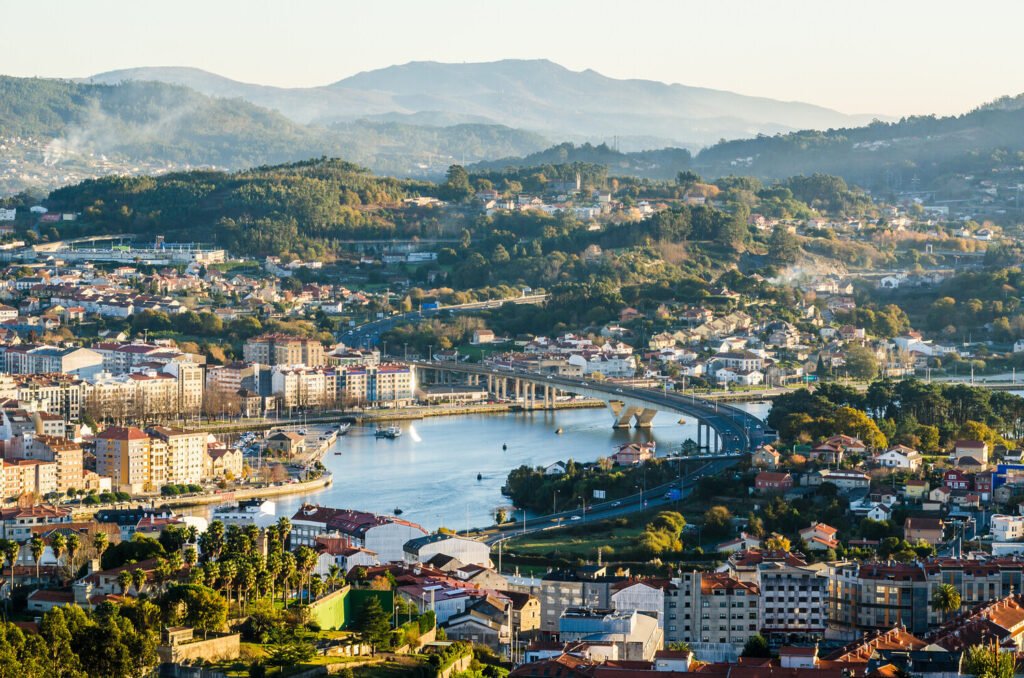
Pontevedra is one of Spain’s most livable cities, designed around people rather than traffic. Its historic center is almost entirely pedestrian, allowing cafés, plazas, and street life to flow without interruption. The result is a city that feels relaxed, sociable, and effortlessly elegant.
Stone arcades, Renaissance buildings, and flowing river views give Pontevedra a timeless charm, while its proximity to beaches and coastal villages makes it an ideal base for exploring the Rías Baixas. The city has a strong food culture, a youthful energy, and a pace that feels neither rushed nor sleepy. Pontevedra excels at balance- between tradition and ease, urban life and coastal escape.
Top Things to See & Do:
- Wander the Old Town pedestrian streets
- Visit the Church of Peregrina
- Relax in central plazas filled with cafés
- Take short trips to nearby beaches
Best for: Relaxed urban travel, food lovers, cafés, and coastal day trips.
Ferrol
Quick Facts:
| Province: | A Coruña |
| Population (2024): | 64,358 |
| Known for: | Naval history, military shipyards, rugged coastline |
| Setting: | Deep Atlantic harbor |
What Makes it Special:
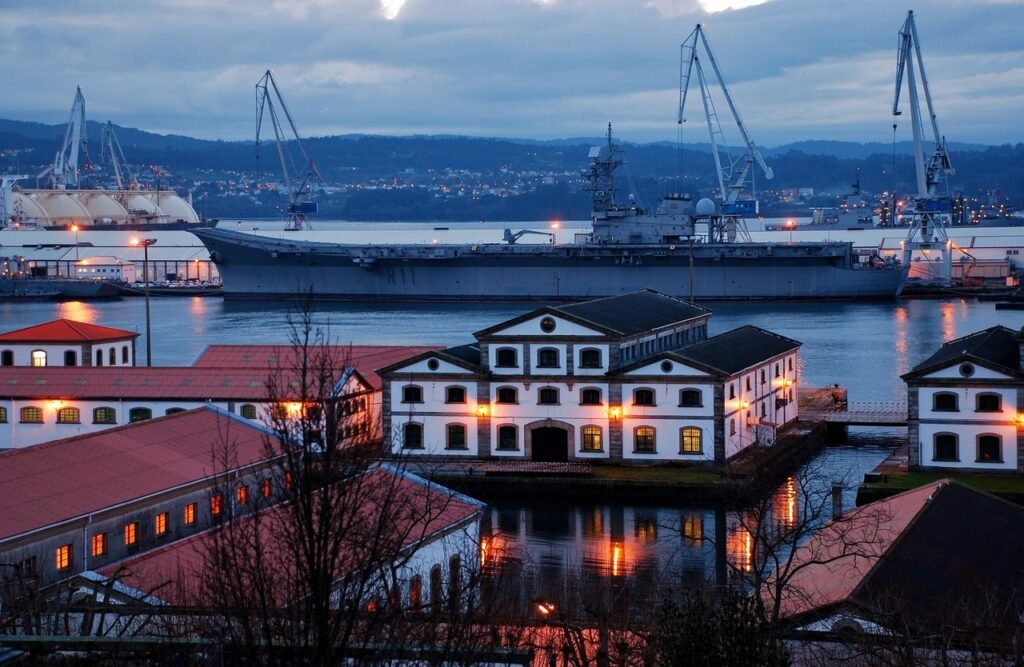
Ferrol is Galicia’s most distinctly naval city. Ships, docks, and arsenals have shaped its identity for centuries, and its history is inseparable from Spain’s maritime power. The city’s layout, fortifications, and industrial waterfront reflect that strategic past.
Beyond its military roots, Ferrol is surrounded by some of Galicia’s wildest and least crowded coastline. Rugged cliffs, wind-swept beaches, and Atlantic headlands lie just outside the city. Ferrol feels quieter, more reserved, and more austere than other Galician cities, but deeply authentic. It appeals to travelers drawn to maritime history, raw landscapes, and places that haven’t been polished for tourism.
Top Things to See & Do:
- Visit the Naval Construction Museum (Exponav)
- Visit Castillo de San Felipe
- Explore the street art in Canido
- Explore the wild beaches outside the city
Best for: Maritime history, dramatic coastlines, off-the-beaten-path travelers
Final Thoughts
Galicia’s cities don’t compete with one another — they complement each other. Together, they offer a way of traveling that’s slower, more varied, and more rooted in daily life than Spain’s larger urban centers. Choosing between them isn’t about ranking, but about temperament: coast or interior, movement or stillness, arrival or retreat.

Best Beaches in Galicia

The Cíes Islands: Visiting Galicia’s Most Beautiful National Park

Ultimate Guide to Ribeira Sacra
What To See in Santiago de Compostela

What To Do in A Coruña
