
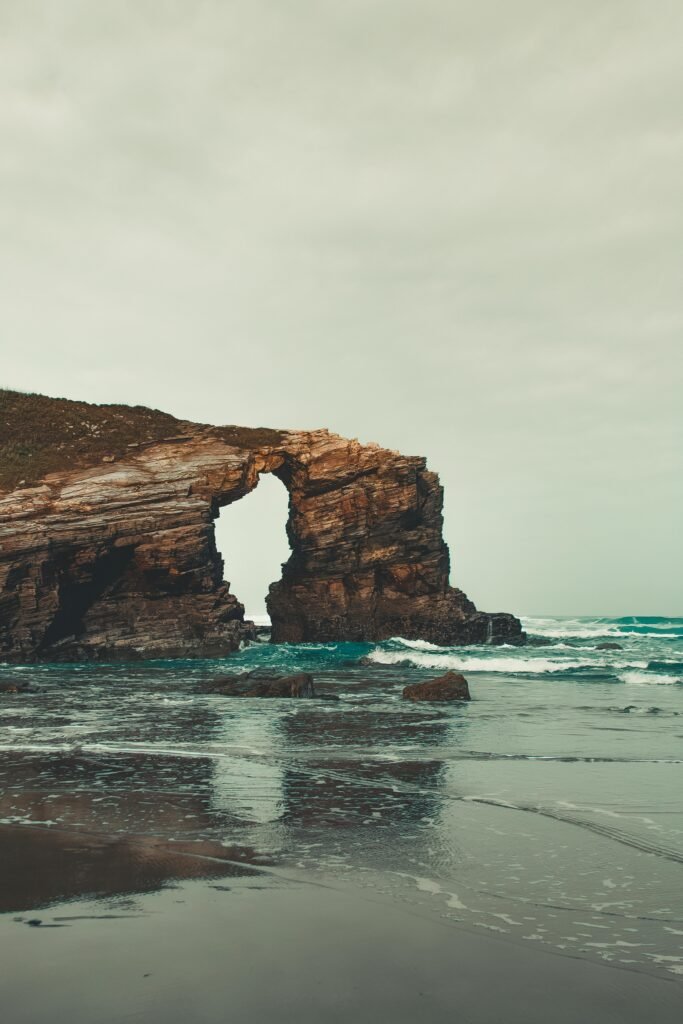
The 10 Most Beautiful Beaches in Galicia
Galicia’s coastline is long, varied, and shaped by Atlantic weather. Some beaches are calm and sheltered; others are exposed, wild, and better suited to walking or surfing than swimming. The beaches below are selected for their landscape, access, and distinct character—not popularity alone.
1. Playa de Rodas (Islas Cíes)
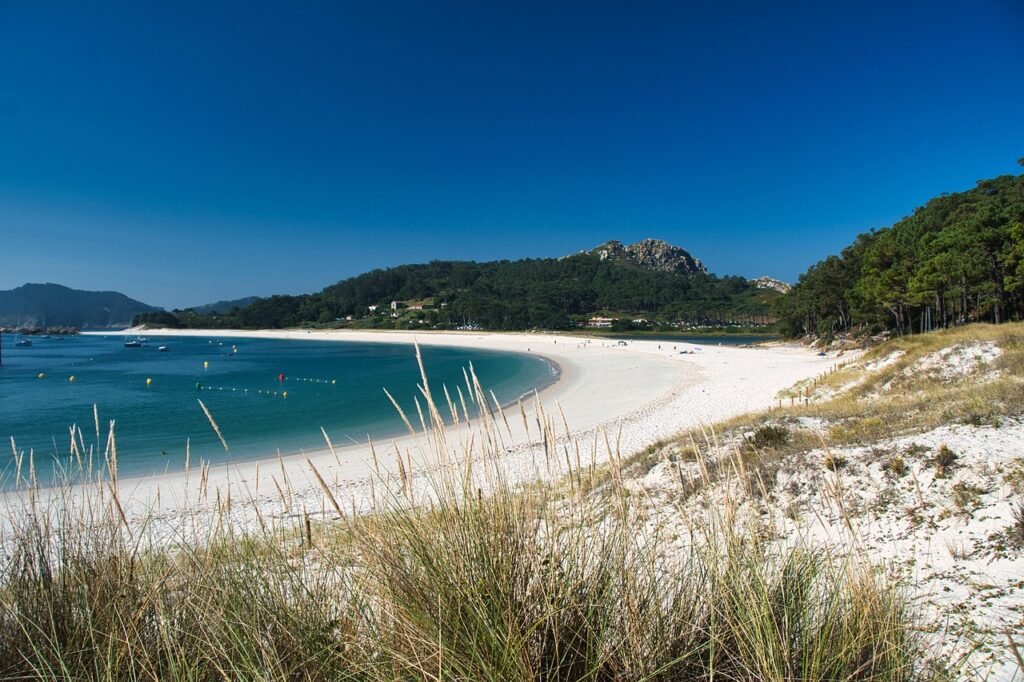
Playa de Rodas stretches for roughly 1.3 km across Monteagudo Island in the Islas Cíes, part of the Parque Nacional das Illas Atlánticas. Its fine white sand and clear water are often cited as among the most striking in Spain.
Behind the beach lies a protected lagoon system, and on calm days swimming and light snorkeling are possible, though water temperatures remain cold year-round.
How to Visit
Ferries operate from Vigo, Baiona, and the Morrazo peninsula, with crossings under one hour. Visitor numbers are limited, and advance booking is essential in high season. For more information about booking, check out Cíes Islands Article.
Good to Know
As a national park, regulations are strictly enforced: no pets, drones, fishing, vehicles, or amplified music.
2. Playa de las Catedrales (Lugo)
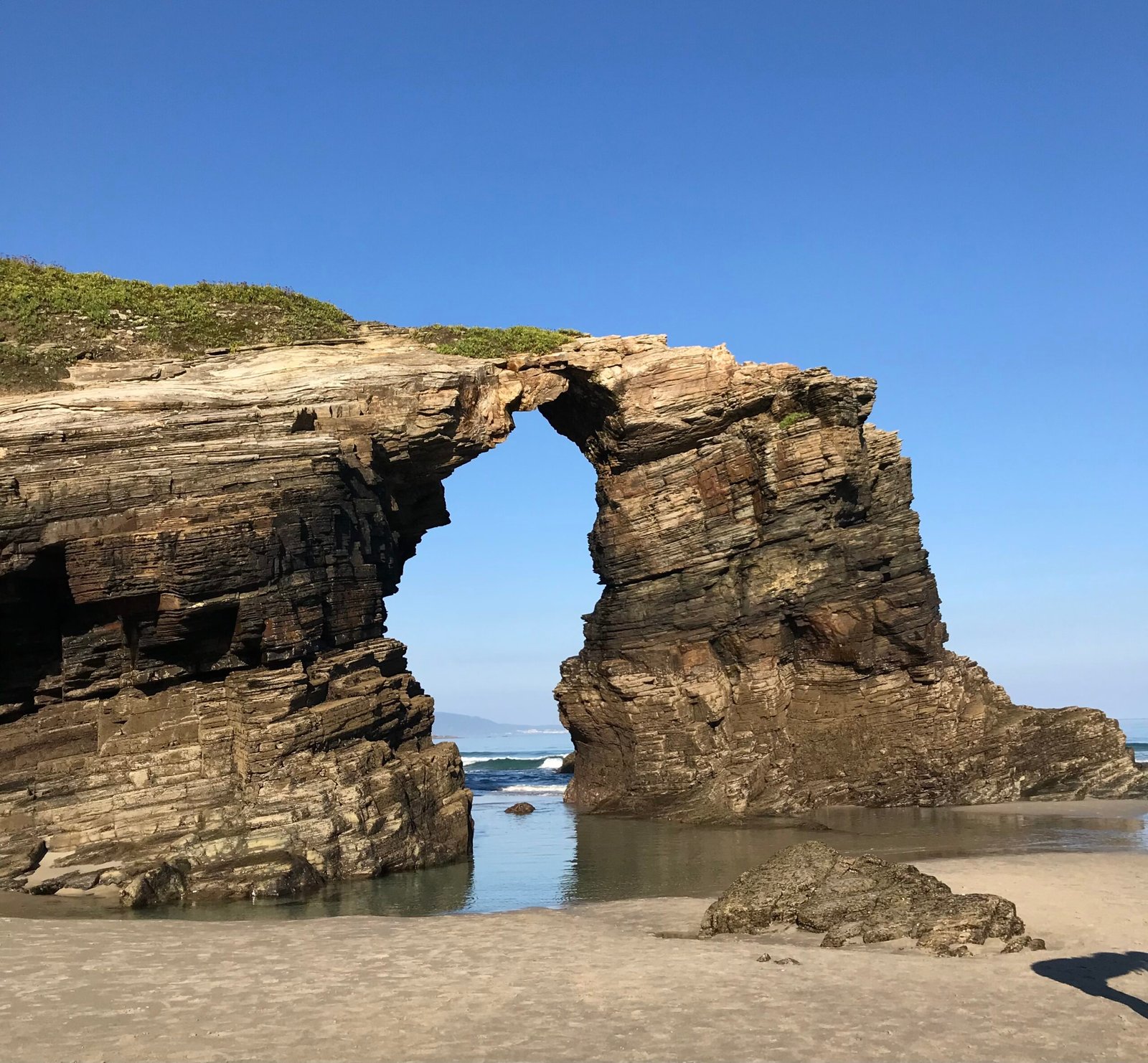
Playa de las Catedrales, near Ribadeo, is Galicia’s most recognizable beach. Its arches, caves, and sculpted cliffs are the result of centuries of Atlantic erosion, creating a landscape that feels closer to a natural monument than a traditional beach.
The beach is best experienced on foot rather than as a place to swim. At low tide, visitors can walk beneath the rock formations and across the sand flats; at high tide, much of the beach disappears beneath the sea.
How to Visit
Access is easy by car via the N-634, with parking and coastal viewpoints nearby. From July through September and during Semana Santa, free reservations are required to manage visitor numbers. Outside peak periods, access is unrestricted.
Good to Know
Low tide is essential for walking the beach. Swimming is possible but not the main reason to visit.
3. Playa de Nosa Señora (Islas Cíes)
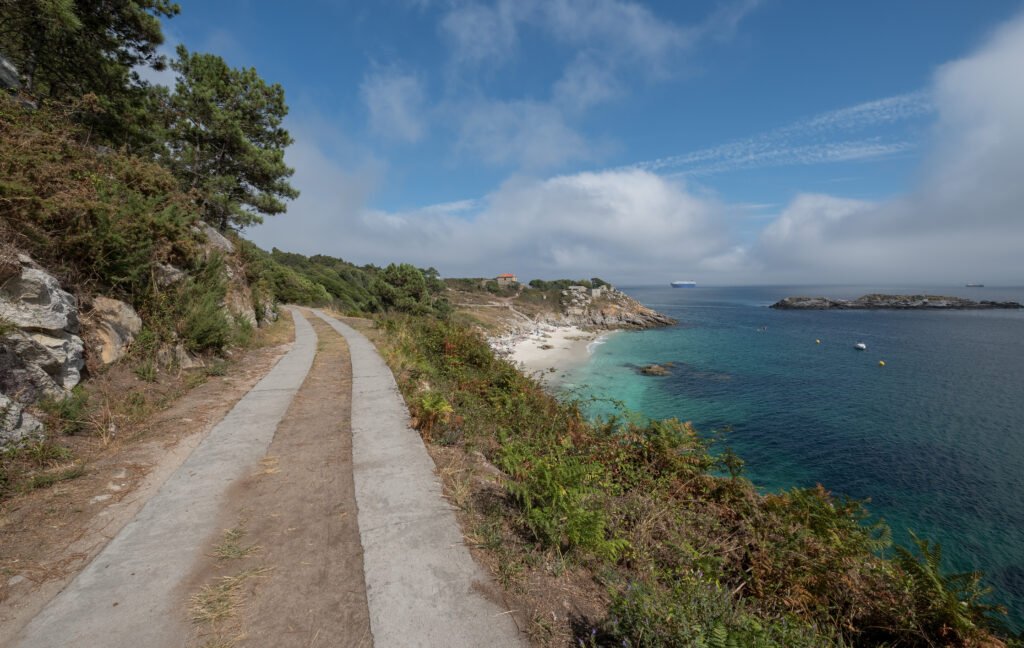
Playa de Nosa Señora is a smaller, more enclosed beach on O Faro Island in the Cíes archipelago. Backed by cliffs and less exposed than Playa de Rodas, it often feels calmer and quieter.
The water is relatively shallow near the shore, making it one of the better swimming spots on the islands when sea conditions allow. Snorkeling is possible close to the rocks on calm days.
How to Visit
The beach is reached via the same ferry system as the rest of the Cíes Islands, followed by a walk of about 15 minutes from the dock. For more information about booking, check out Cíes Islands Article.
Good to Know
There are no services on the beach. Conditions can change quickly depending on wind and swell.
4. Playa de Carnota (Costa da Morte)
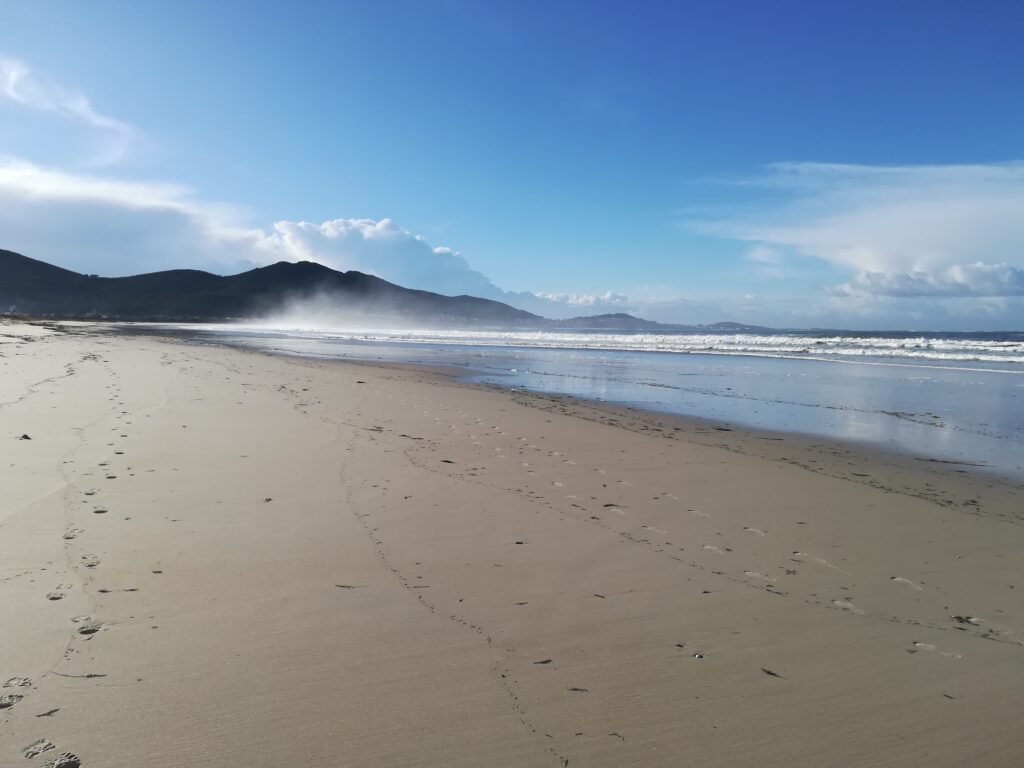
At nearly 7 km long, Playa de Carnota is the longest beach in Galicia. It lies beneath Monte Pindo along the Costa da Morte, combining dunes, wetlands, and a protected interior lagoon.
This is a wide, open Atlantic beach with frequent wind and strong waves. It’s better suited to long walks, surfing, and landscape photography than swimming.
How to Visit
Access is by car only. Free parking is available along the length of the beach.
Good to Know
Currents and wave conditions make it unsuitable for casual swimming.
5. Playa de A Lanzada (Rías Baixas)
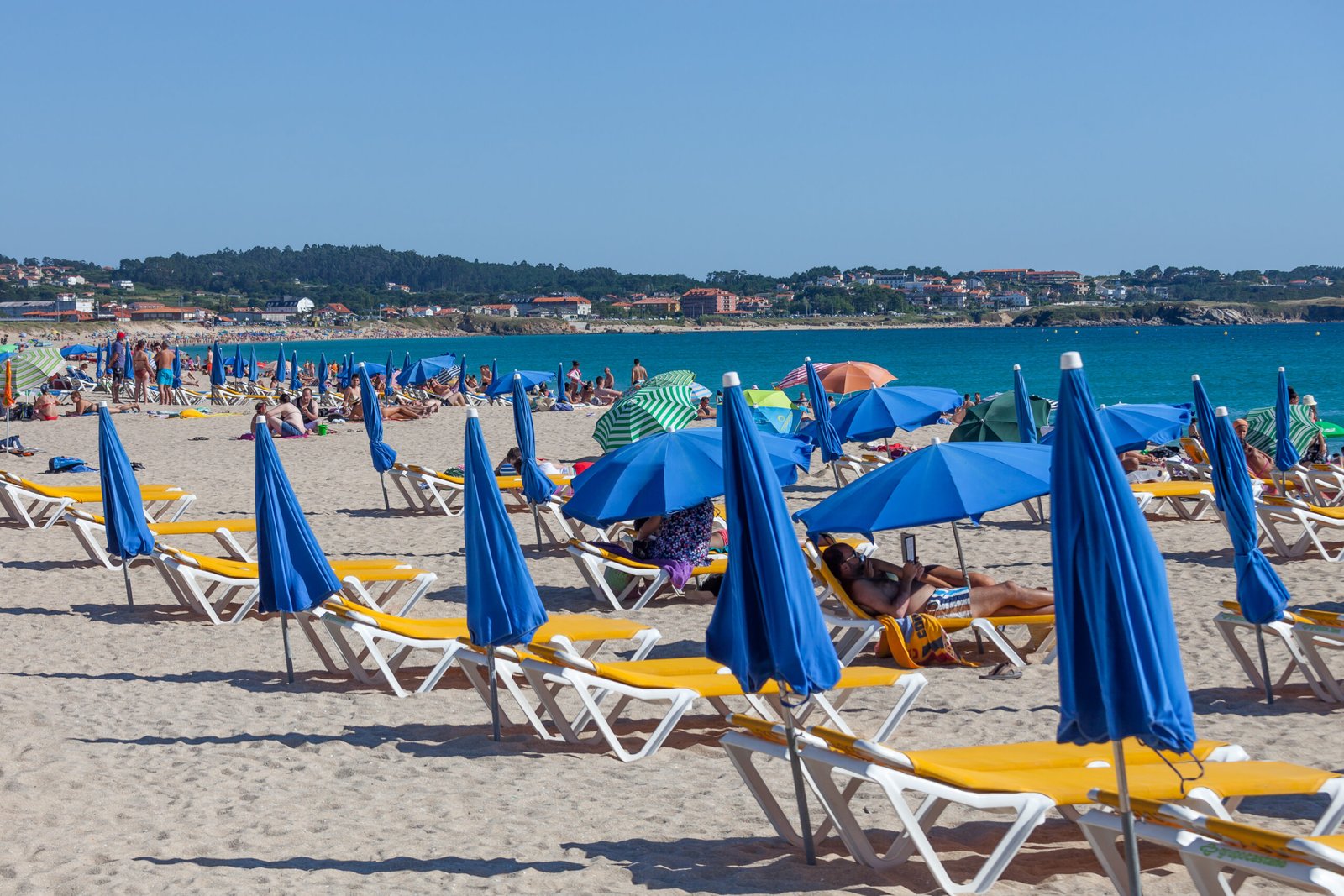
Located between Sanxenxo and O Grove in the Rías Baixas, Playa de A Lanzada is one of the most visited beaches in the region. Stretching for about 2.5 km, it faces the open Atlantic and the Ons Islands.
The exposure brings consistent wind and waves, making it popular for surfing, windsurfing, and kitesurfing. Swimming conditions vary widely depending on the day.
How to Visit
Large free parking areas are available, and the beach is well served by surf schools and beach bars.
Good to Know
It can feel crowded in summer, especially compared to more remote Galician beaches.
6. Illa de Arousa & Islote Areoso
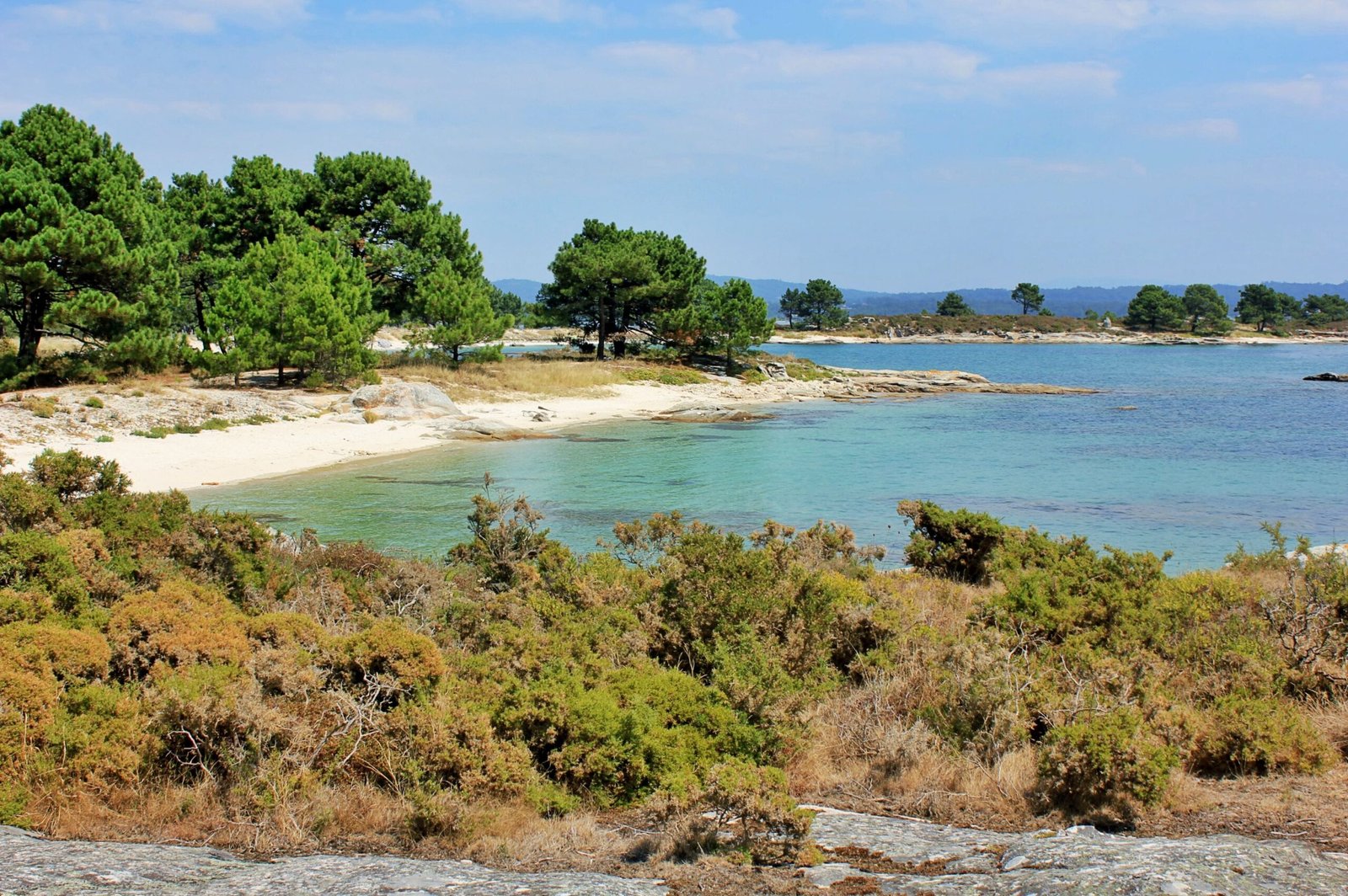
Illa de Arousa is a low-lying island connected to the mainland by a bridge. It’s home to the Parque Natural de Carreirón, where walking paths link a series of calm, sheltered beaches.
Off the coast lies Islote Areoso, a small uninhabited island with white sand, clear water, and archaeological remains, offering a more remote experience
How to Visit
Illa de Arousa is reached by car. Access to Areoso requires a kayak, paddleboard, or small boat.
Good to Know
Visiting Islote Areoso requires advance authorization from the Xunta de Galicia, with strict limits on daily visitors.
7. Playa de Pantín (Valdoviño)
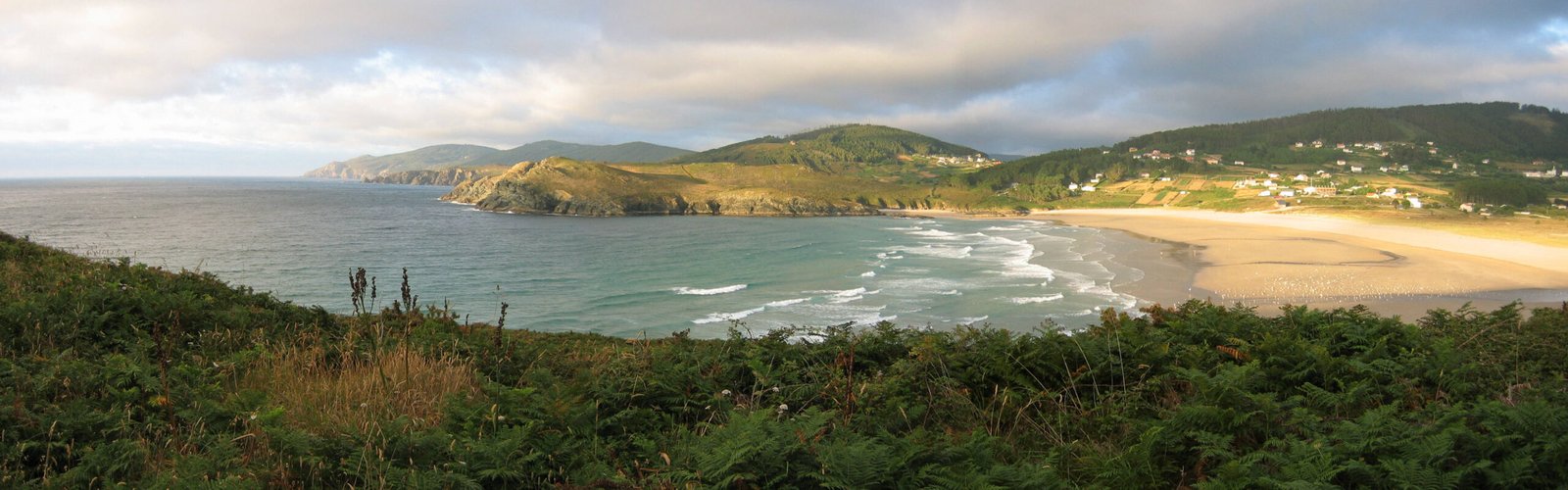
Playa de Pantín is one of Galicia’s most important surf beaches and host to the annual Pantín Classic competition. The beach is long, open, and consistently exposed to wind and swell.
While swimming conditions are often rough, it’s a reliable spot for surfing and coastal walks, backed by open countryside.
How to Visit
Easy road access with a large free parking area. Surf schools and restaurants operate nearby.
Good to Know
A smaller neighboring beach is officially nudist. Playa do Baleo, a short drive away, offers similar conditions.
8. Playa de Santa Comba (Ferrol)
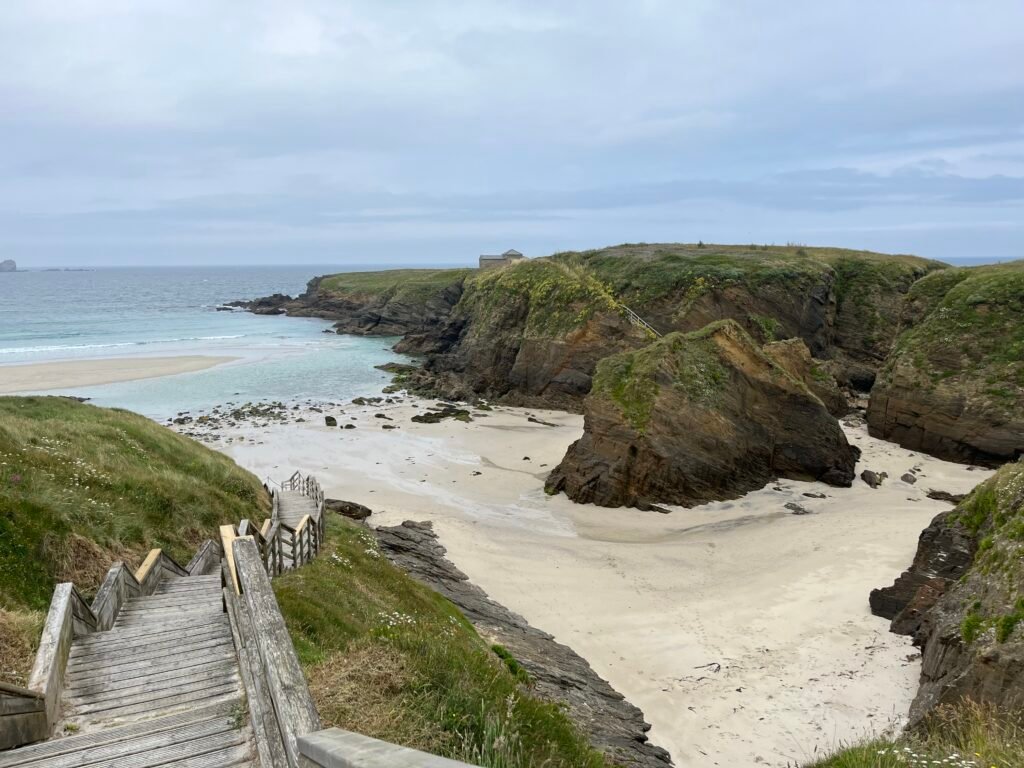
Located just outside Ferrol, Playa de Santa Comba is a wide, rugged beach within a protected coastal zone recognized by the EU.
Strong wind and waves make it better suited to walking, scenery, and surfing than swimming. At low tide, it’s possible to walk out to a small island topped by a historic hermitage.
How to Visit
Accessible by road, with basic parking nearby.
Good to Know
Facilities are minimal, reinforcing the beach’s undeveloped feel.
9. Playa de Mogor (Rías Baixas)
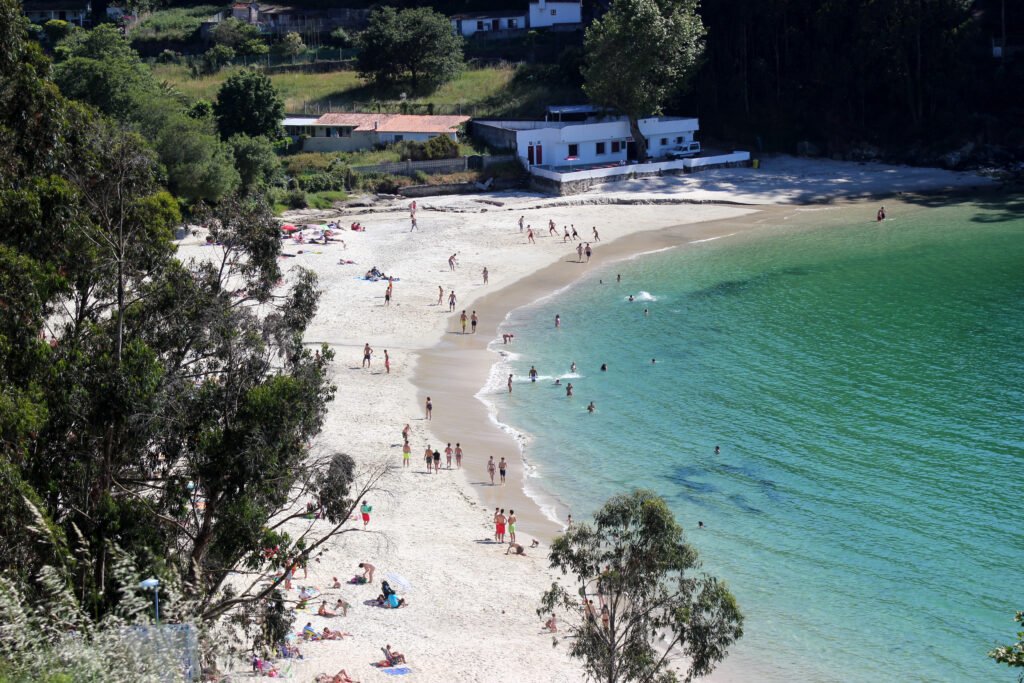
Playa de Mogor, near Marín, is a sheltered beach surrounded by woodland. Its orientation protects it from wind and swell, resulting in calm, clear water.
It’s a dependable choice for swimming and relaxed beach days, particularly compared to more exposed Atlantic beaches.
How to Visit
Limited free parking is available. Paid parking can be found at a nearby restaurant.
Good to Know
Arriving early in summer makes parking easier.
10. Playa de Xilloi (Lugo)
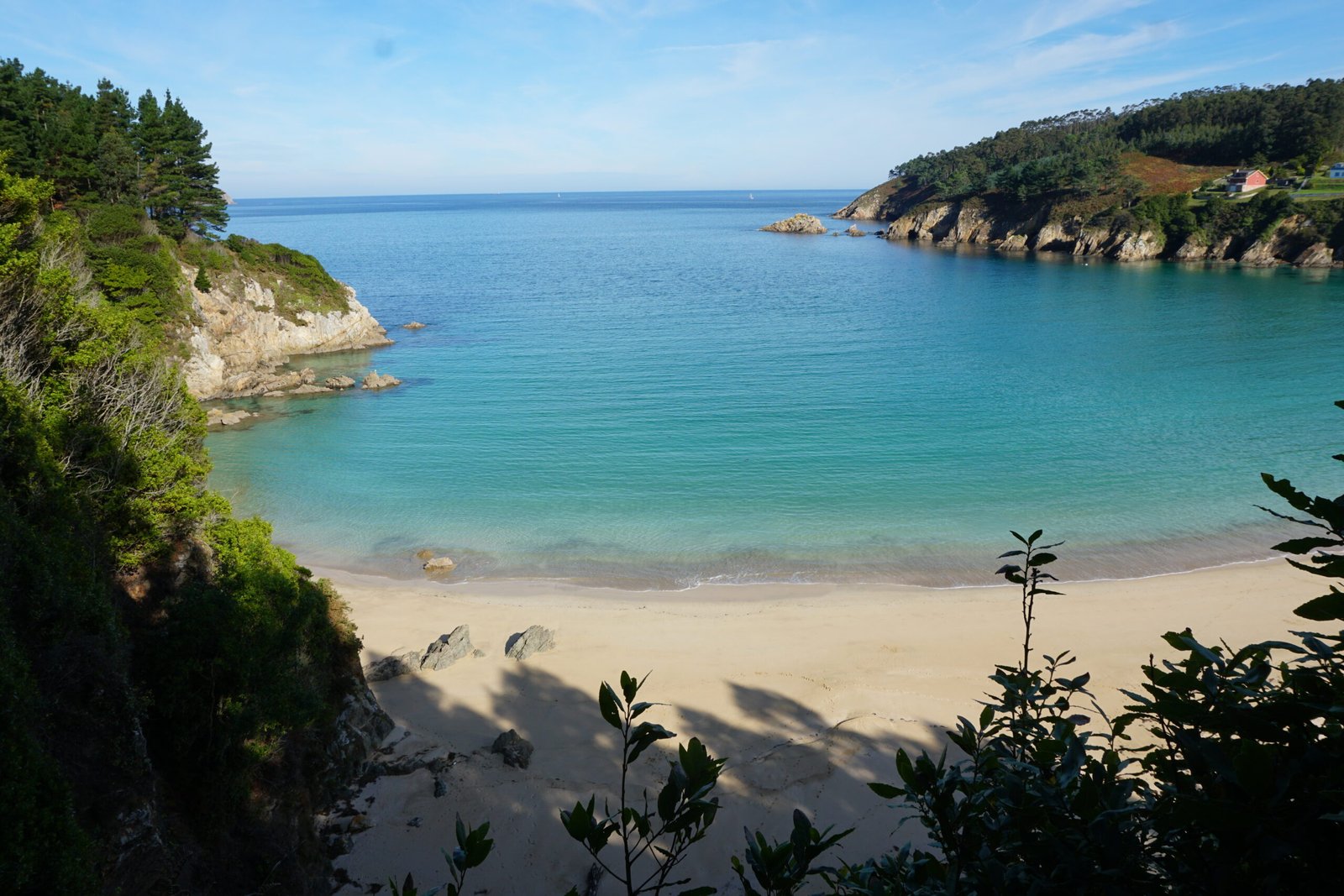
Playa de Xilloi, in O Vicedo, is a small, sheltered beach known for calm water and sunset views.
The protected setting makes it suitable for swimming and families, with a quieter atmosphere than larger beaches.
How to Visit
Free parking is available, though spaces are limited.
Good to Know
A small seasonal bar operates in summer; there are no restaurants on the beach.
One of Galicia’s Most Beautiful Coastal Stretches: Ferrol to Cedeira
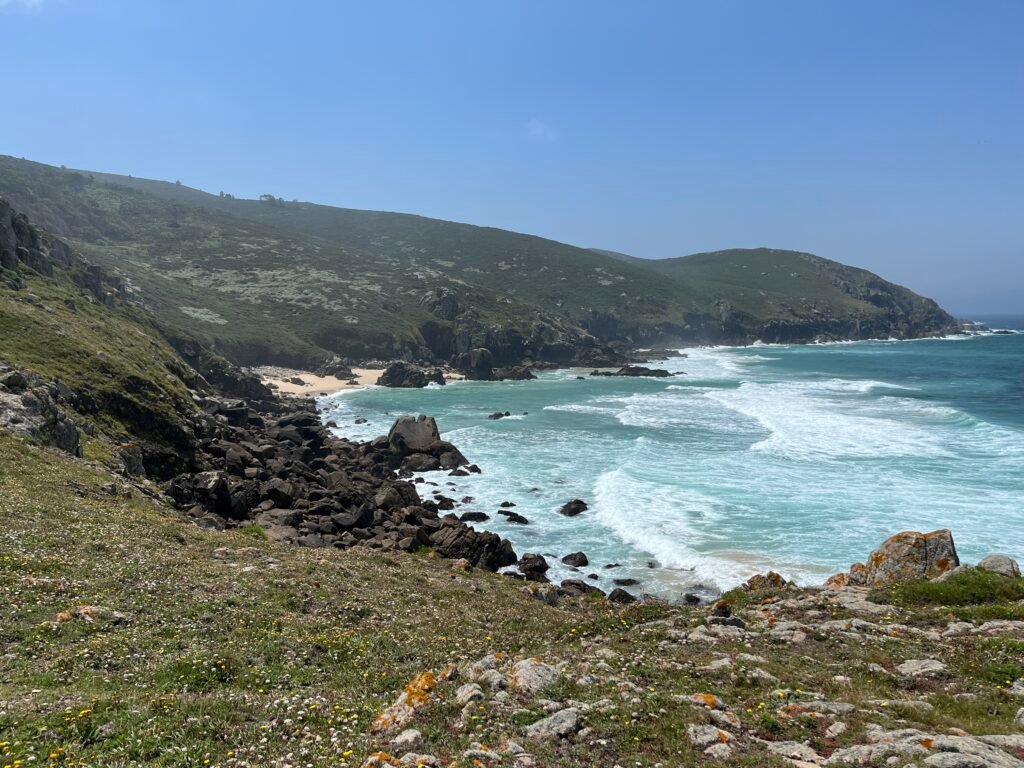
Between Ferrol and Cedeira lies one of Galicia’s most consistently dramatic and unspoiled stretches of coastline.
Several of the beaches already featured above—such as Pantín and Santa Comba—sit within this section of the coast. Beyond them, the shoreline continues almost uninterrupted, with wide Atlantic beaches, cliffs, and headlands appearing one after another along the coastal road, often with little development and far fewer visitors.
From Praia de Lumebó west toward Cedeira, some beaches, like Praia de Campelo, are relatively accessible, while others require steep or poorly marked access and are best approached by confident walkers. That difficulty is part of what keeps this coastline quiet, even in summer.
Conditions here are typically windier, with stronger swell and cooler water. This is a coast shaped for surfing, walking, and raw scenery rather than swimming. For travelers drawn to the beaches above for their landscapes rather than convenience, this stretch works best as a coastal drive, stopping where access, light, and sea conditions align on the day.
Beaches Mapped Out

The 7 Cities of Galicia Explained

The Cíes Islands: Visiting Galicia’s Most Beautiful National Park

Ultimate Guide to Ribeira Sacra
What To See in Santiago de Compostela

What To Do in A Coruña
