
San Juan in Galicia: Fire, Beaches, and the Longest Night
In Galicia, the night of June 23 doesn’t ease in.
It breaks open.
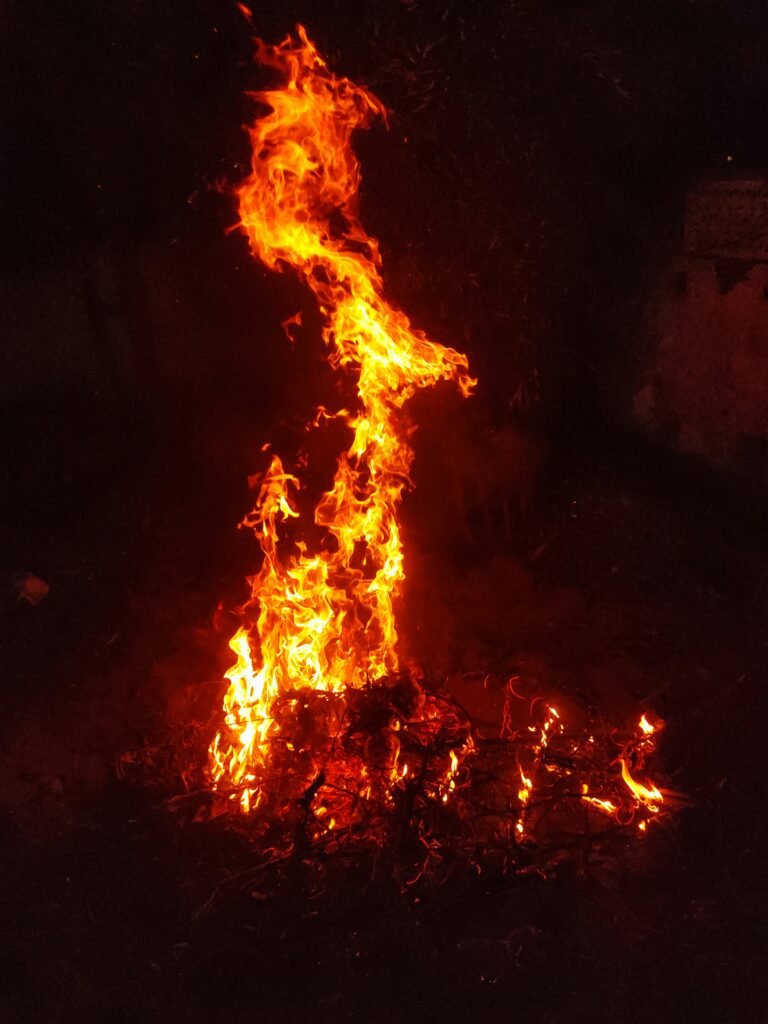
Bonfires appear along beaches, in parking lots, at street corners. Sardines smoke on improvised grills. Wine is poured without counting glasses. By midnight, the boundary between stranger and neighbor has largely dissolved.
San Xoán—Galicia’s midsummer night—is not a performance or a reenactment. It is a collective release, practiced annually and taken seriously even when it looks chaotic.
To understand the festival is to understand how Galicia handles ritual, community, and excess—briefly, and on its own terms.
Why San Juan Matters Here
San Juan is celebrated across Spain, but in Galicia it carries particular weight.
This is an Atlantic region shaped by long winters, rain, and darkness. The arrival of summer has always mattered. Fire, in this context, is not decorative—it’s symbolic and practical, a gesture of renewal that predates Christianity.
The Church attached the feast of St. John the Baptist to the solstice. Galicia kept the fire.
What remains is a night that feels ancient without being staged, communal without being organized.
A Coruña and the Center of Gravity
No place embodies San Xoán quite like A Coruña.
Here, the celebration moves decisively to the sea. Beaches such as Riazor and Orzán fill with tens of thousands of people. Bonfires stretch in long lines along the sand. At midnight, the city pauses, then ignites.
Despite the scale, the atmosphere remains participatory rather than managed. There are rules—fires must be extinguished by morning—but little choreography. People bring their own food, their own music, their own circle.
The beach becomes a shared living room until sunrise.
Fire as Ritual, Not Spectacle
Jumping the bonfire is the most recognizable San Xoán ritual. Traditionally done an odd number of times—often nine—it’s meant to purify, protect, and reset.
Some people follow the ritual closely. Others jump once, or not at all. No one checks.
This flexibility is part of the festival’s strength. Meaning exists without enforcement. Participation is voluntary, but presence is assumed.
Fire here is not watched. It’s crossed.
Sardines, Smoke, and Improvised Meals
San Xoán is inseparable from food—specifically sardines.
Grilled quickly over open flame, eaten with bread and wine, sardines are practical, seasonal, and deeply local. Their smell defines the night as much as the smoke from the fires.
What matters is not the dish itself, but the way it’s eaten: standing, sharing, passing plates between groups who met minutes earlier.
San Xoán meals are not planned. They emerge.
A Night That Ignores Sleep
San Xoán does not have a closing hour.
Music drifts from portable speakers. Conversations restart repeatedly. People move between groups, beaches, streets, and bars. Children stay out late. Older generations watch from benches or doorways.
At dawn, the night resolves not with an ending but with fatigue. Fires are put out. The sea quiets. People go home slowly.
June 24 is officially a holiday in many places for a reason.
Beyond the Cities: San Xoán Elsewhere in Galicia
Outside major cities, San Xoán takes different forms.
In villages, fires are smaller and closer to home. Herbs are gathered and left out overnight, later used to wash faces for protection. Neighbors share food more deliberately. The night feels tighter, less anonymous.
Both versions are authentic. The difference is scale, not meaning.
What Visitors Often Get Wrong
San Xoán is not:
- a concert
- a scheduled event
- a spectacle designed for photos
Arriving with an agenda usually leads to disappointment. The night doesn’t move on a program. It moves by momentum.
The best way to experience San Xoán is to arrive early, stay flexible, and let the night reorganize you slightly.
San Xoán and Galician Identity
San Xoán reveals something essential about Galicia.
This is a culture that tolerates disorder—but only temporarily. Excess is allowed one night a year, then contained again. Fire is lit, then extinguished. Rules are bent, not broken.
The night works because it ends.
That balance—release followed by return—is deeply Galician.
Why San Juan Is Worth Planning Around
If you want to understand Galicia beyond landscapes and food, San Xoán is one of the clearest entry points.
It requires no tickets, no insider access, no belief system. You show up, bring something to share, and stay until you’re done.
Few festivals offer that level of immediacy.
San Xoán is not subtle.
But it is sincere.
And by morning, the longest night has done its work.
Related Reading

Festivals in Galicia: How to Choose One Worth Going To

Festivals in Galicia: A Month-by-Month Calendar

Galician Music Festivals: Ortigueira, Noroeste, and Beyond

Village Fiestas in Galicia: What to Expect (and How to Join)

Food-Focused Festivals in Galicia

The Ultimate Guide to Carnival in Galicia
