Rías Baixas: Galicia’s Atlantic Wine Region
Rías Baixas is Galicia’s best-known wine region and, for many drinkers, their first encounter with Albariño. That familiarity can be misleading.
While the region shares a clear Atlantic identity, Rías Baixas is not stylistically uniform. Distance from the coast, exposure, soil, and producer intent all shape how Albariño behaves in the glass. Some wines are taut and saline, others broader and more textured. Understanding Rías Baixas means paying attention to place rather than labels.
The region rewards nuance.
Where Rías Baixas Is — and Why It Matters
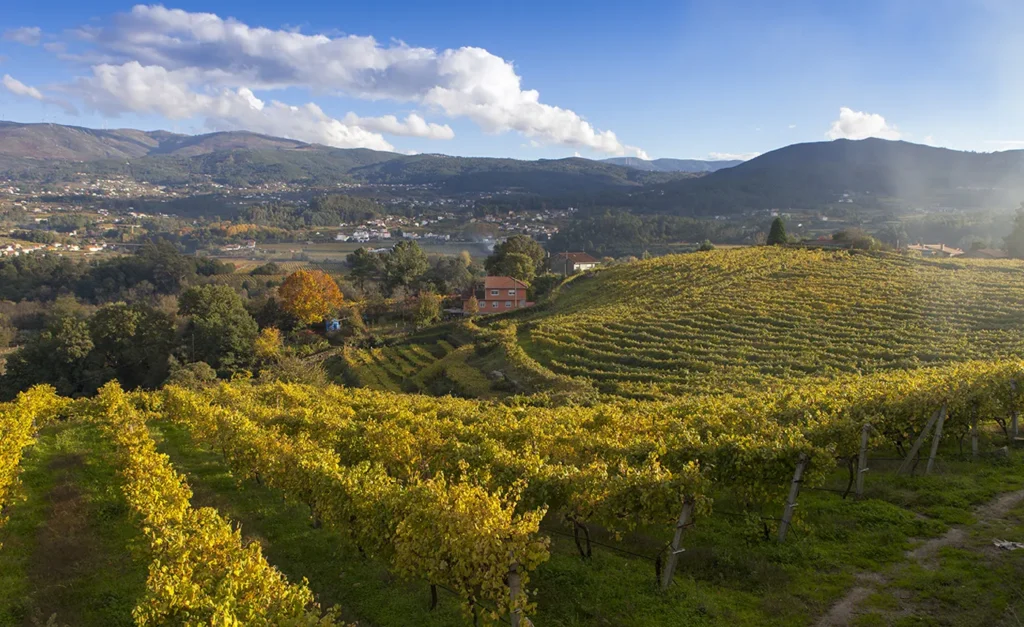
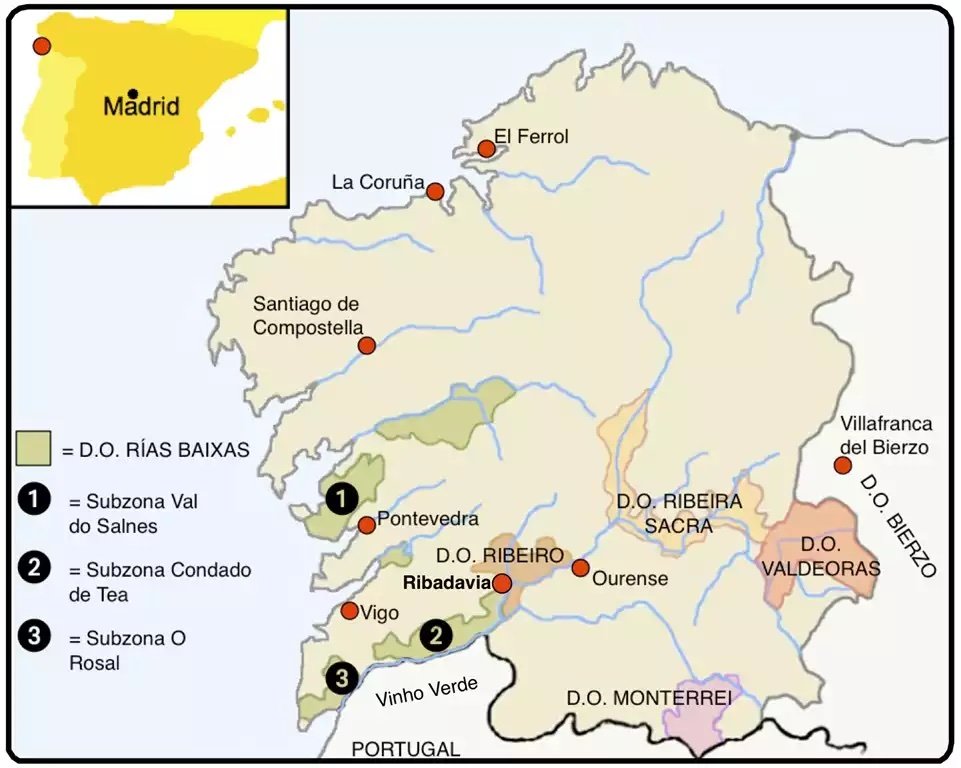
Rías Baixas runs along Galicia’s western coastline, shaped by deep Atlantic inlets (rías), persistent humidity, and long, temperate growing seasons. Vineyards are rarely far from the ocean, and that proximity defines the wines.
Key conditions include:
- Strong maritime influence
- High rainfall moderated by airflow and extended ripening
- Predominantly granite-based soils
- Moderate alcohol preserved by climate
These factors favor wines with high natural acidity, mineral tension, and a clear relationship to food. Albariño succeeds here not because it is especially aromatic, but because it maintains structure and balance under Atlantic conditions.
The Subregions of Rías Baixas — and How They Differ
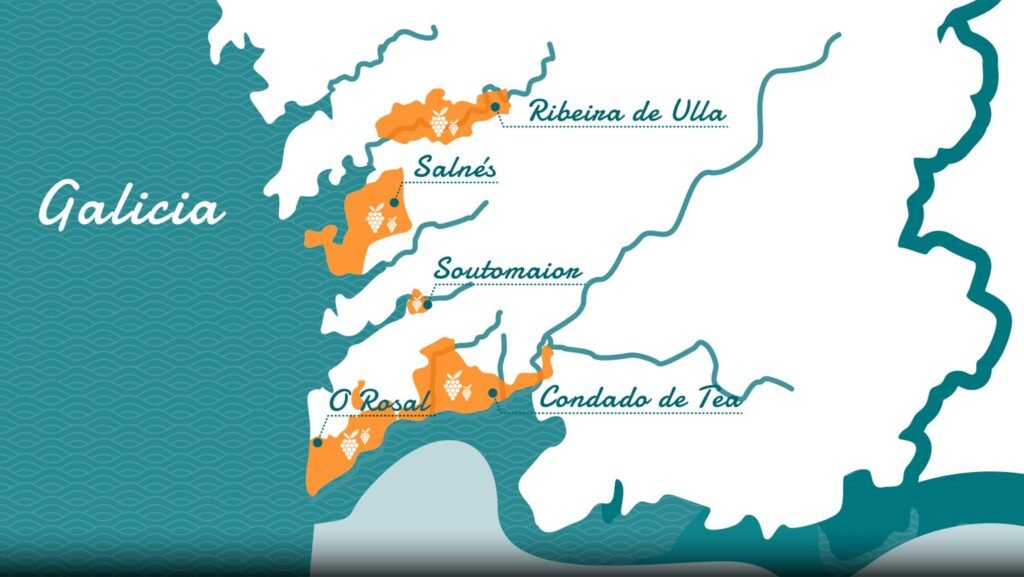
Rías Baixas is officially divided into five subzones. In practice, three account for most of the region’s stylistic range and most of what visitors encounter.
Val do Salnés
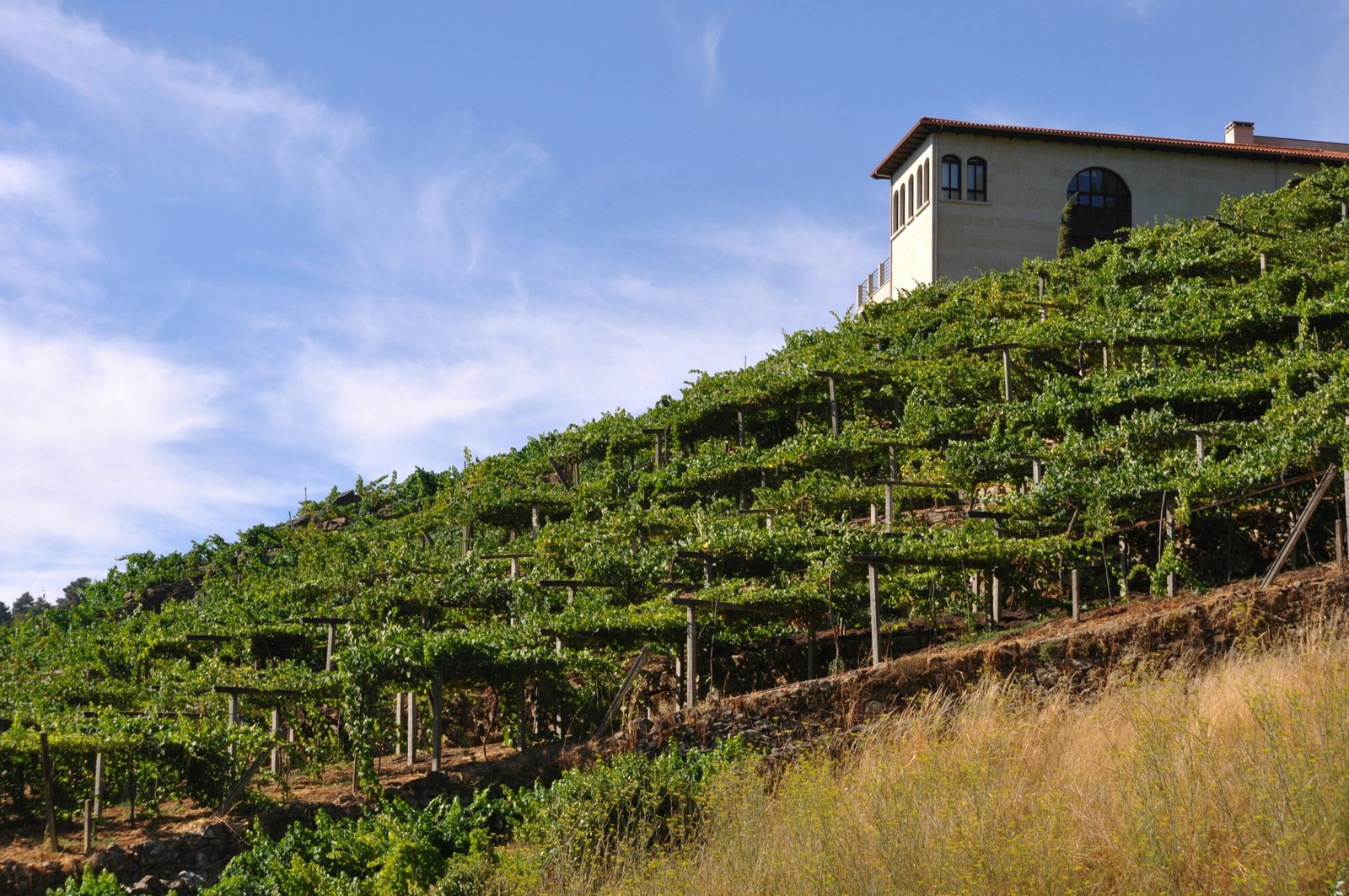
Centered around towns like Cambados and Meaño, Val do Salnés is often treated as the reference point for Rías Baixas. It is the coolest and most maritime part of the region, with vineyards rarely far from the ocean and many trained on pergolas to manage humidity.
Typical traits include:
- Clear salinity
- Citrus and green apple notes
- Linear structure with firm acidity
When handled carefully, particularly with lees aging, these wines are often the most age-worthy expressions of Albariño.
O Rosal
Near the Miño River and the Portuguese border, around A Guarda and Tomiño, O Rosal is slightly warmer and more sheltered. Albariño is frequently blended with other local varieties here, which changes the shape of the wine more than its freshness.
Wines from O Rosal tend to show:
- Softer acidity
- Broader mid-palate
- Subtle floral or stone-fruit notes
They’re often more immediately approachable, while remaining balanced and precise.
Condado do Tea
Further inland, near Tui and surrounding river valleys, Condado do Tea produces riper expressions of Albariño. Daytime temperatures are higher than along the coast, though nights remain cool enough to preserve balance.
These wines often show:
- Stone fruit rather than citrus
- Slightly higher alcohol
- A fuller, rounder texture
When well made, they trade sharpness for depth rather than freshness.
Soutomaior & Ribeira do Ulla
Soutomaior sits between Val do Salnés and Condado do Tea and tends to show intermediate characteristics, without a clearly distinct stylistic identity.
Ribeira do Ulla, further inland near the Ulla River, occupies a transitional space between Atlantic and interior climates, with wines rarely seen outside the local market.
Neither zone is central to understanding Rías Baixas as a whole, and both are encountered far less frequently than the main subregions.
What to Drink in Rías Baixas (Beyond Entry-Level Albariño)
Not all Albariño is designed for immediate consumption. Many of the region’s most compelling wines focus on texture, length, and controlled aging.
Look for:
- Lees-aged Albariño for added structure
- Single-vineyard bottlings that express site clearly
- Wines released after extended time in bottle, even without oak
Quality in Rías Baixas shows itself as balance and persistence, not weight or wood.
While Albariño dominates, small quantities of other native varieties persist — mostly in blends or local consumption. These wines rarely define the region stylistically, but they reinforce Rías Baixas’ identity as a place of restraint rather than experimentation.
Producers Worth Knowing
Rather than exhaustive lists, these producers represent different approaches executed consistently well:
- Pazo de Señorans — precision, restraint, and longevity
- Do Ferreiro (Gerardo Méndez) — old vines and parcel expression in Val do Salnés
- Zárate — traditional structure with modern clarity
- Albamar — saline, coastal wines with minimal intervention
These names appear often in serious wine conversations for a reason: reliability, not marketing.
Visiting Rías Baixas: Practical Notes
Rías Baixas is not a region built around wine tourism.
- Many wineries are small and appointment-only
- Tastings are typically informal and focused on the wine
- Tourism infrastructure is secondary to production
- Meals usually matter more than cellar visits, and planning helps — but flexibility matters more.
In practice, Rías Baixas is experienced less through tastings and more through meals. Albariño is poured casually alongside seafood lunches, market cooking, and everyday restaurant menus, often without ceremony. For travelers, the most revealing encounters with the region’s wines tend to happen at the table — in marisquerías, village restaurants, and coastal bars where freshness, balance, and timing matter more than labels.
Albariño and Food in Rías Baixas
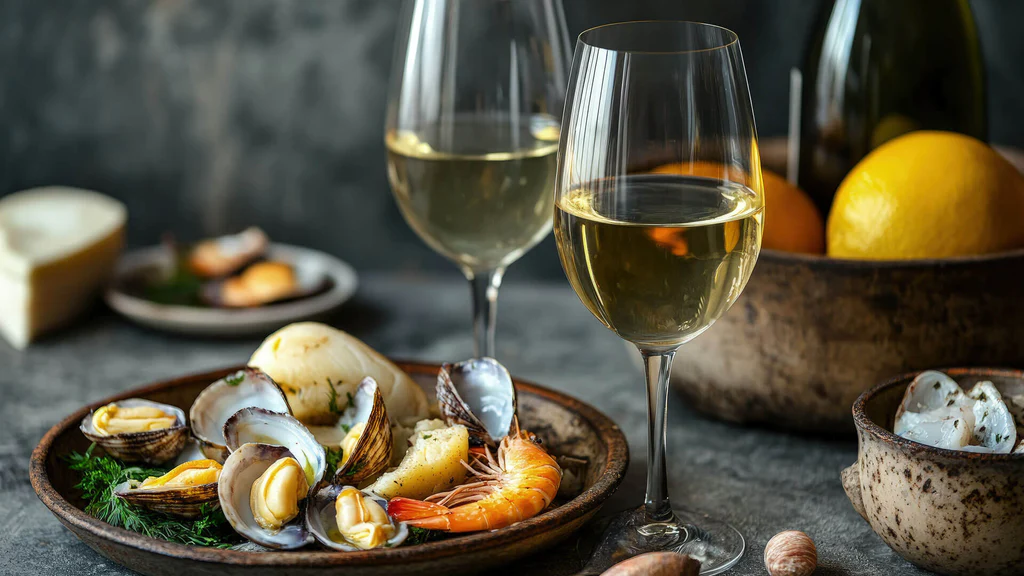
This is where the wines make the most sense.
Classic pairings include:
- Clams and mussels
- Oysters
- Octopus
- Fried fish
- Simple rice dishes
Albariño is meant to refresh and reset the palate, not compete for attention. The goal is continuity at the table.
Common Mistakes Visitors Make
- Treating all Albariño as interchangeable
- Prioritizing winery visits over meals
- Expecting warm-climate richness
- Ignoring subregional differences
Rías Baixas rewards attention and restraint, not box-ticking.
Final Perspective
Rías Baixas isn’t respected because its wines are loud or immediately impressive. It’s respected because they’re dependable.
At their best, these wines reflect Atlantic conditions with clarity and restraint, prioritizing balance and drinkability over display. Approached on those terms, Rías Baixas offers one of Europe’s most coherent white-wine cultures — one that rewards attention rather than spectacle.
Related Reading
The Wines of Galicia: An Overview of All Four Major Regions
Albariño 101: The Complete Guide to Galicia’s Most Famous Wine
The Wines of Ribeiro: Galicia’s Ancient Wine Region Explained
Traditional Galician Drinks: From Queimada to Licor Café